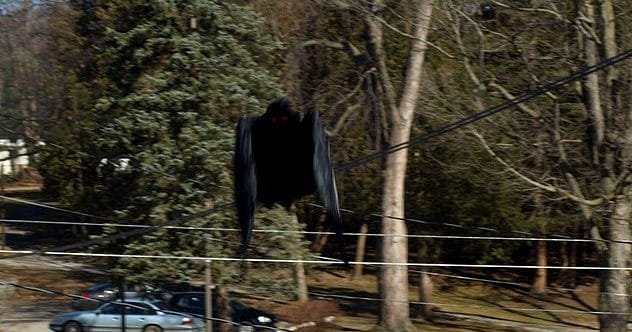
What is it about the unexplained that captivates us? Why do we find ourselves drawn to stories of creatures for which no solid proof exists? The Mothman, a winged, bat-like cryptid, has soared into the American imagination since its first alleged appearance in the 1960s, lodging itself firmly as a modern myth. It all started in 1966, when a sighting in West Virginia hit the headlines of the Point Pleasant Register.
Join us as we delve into the enigmatic world of the Mothman, exploring its origins and the peculiar details that might be older than many realize.
10. Mothman’s Media Debut
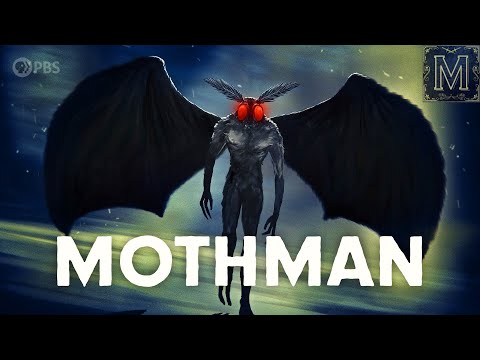
The Mothman flapped its way into public consciousness on Wednesday, November 16, 1966. The Point Pleasant Register ran a story titled, “Couples see man-sized bird…creature…something!” This marked the Mothman’s first media appearance, but certainly not its last.
The article detailed the strange experience of two young couples. They reported to police that a creature had chased them near Point Pleasant, West Virginia. Witnesses described it as a man-like figure, roughly two meters (six to seven feet) tall, with an impressive three-meter (10-foot) wingspan. They claimed the creature glided above their car, and when they aimed their lights at it, its eyes glowed an eerie red.
Just days before this encounter, gravediggers in Clendenin, West Virginia, also reported seeing a similar man-like creature perched in the trees. These sightings persisted for 13 months, mysteriously ceasing after the Silver Bridge collapse tragedy. [1]
9. Ominous Warning or Sinister Agent?

Reports of a winged, flying man-like entity continued in West Virginia until the catastrophic Silver Bridge collapse in December 1967, which claimed 46 lives. Because the sightings seemed to end after this disaster, a legend emerged: was the Mothman trying to warn the community, or did it cause the tragedy? Either way, its association with disasters grew.
It’s important to note that a government investigation identified the cause of the collapse as a structural fracture. This fracture resulted from “the development of a critical-size flaw over the 40-year life of the structure as the result of the joint action of stress corrosion and corrosion fatigue.” The bridge plummeted into the river in under 20 seconds, taking 32 vehicles and 46 people with it. [2]
8. Chicago’s Own Aerial Enigma

Chicago might just have its own resident Mothman stirring unease. Since 2011, accounts of a human-like figure soaring through the city skies have been accumulating. Many witnesses described a flying, man-like creature with glowing red eyes that instilled a “sense of dread” upon sighting.
The Chicago sightings have mostly occurred at night and near bodies of water. While many media reports have treated these accounts with skepticism, new sightings continue to surface. One of the most bizarre Chicago reports came from a man who claimed to see a human-like figure perched on the Willis Tower in broad daylight. He allegedly watched it leap off the skyscraper and fly away. [3]
7. Mothman at Chernobyl Before the Disaster?

In 1986, a reactor failure at the Chernobyl nuclear power plant in Ukraine led to a devastating explosion. This event killed 30 people within months and contaminated 150,000 square kilometers (57,915 square miles) across Belarus, Russia, and Ukraine. The immediate uninhabitable “exclusion zone” around the plant spans 2,600 square kilometers (1,000 square miles). The true death toll is far higher, with 1,800 children later diagnosed with thyroid cancer.
Reportedly, in the days leading up to the reactor failure, plant workers claimed to have seen a creature near the facility. They dubbed this entity the “Blackbird of Chernobyl.” This blackbird shares some striking similarities with the Mothman, leading some to believe they might be one and the same.
Like the Mothman, witnesses described the Blackbird of Chernobyl as appearing days before a tragedy, possessing glowing red eyes, and having a large wingspan. As with other Mothman sightings, these reports remain difficult to verify. [4]
6. Is the Mothman Just a Misidentified Sandhill Crane?

What shares many of the Mothman’s characteristics—a large wingspan, red eyes that can appear to glow in the dark, and a tendency to frequent areas near water—but isn’t a harbinger of doom? The answer might be a sandhill crane.
Sandhill cranes are large birds, with wingspans reaching nearly two meters (five to six feet). When they fly, they extend their necks, spread their wings wide, and trail their feet behind them. This creates an unusual silhouette, especially when seen flying overhead on a dark night—particularly if the Mothman is already on one’s mind.
If the sandhill crane explanation doesn’t satisfy you, other theories persist, including an alien, a barn owl, or a Native American legend like the Thunderbird. [5]
5. Mothman Statues Instead of Confederate Monuments?

A petition on Change.org, with nearly 21,000 signatures and aiming for 25,000, proposes replacing every Confederate statue in West Virginia with one of the Mothman.
The petition, addressed to the West Virginia State Senate, states, “The Confederate Statues should not represent our country. The Robert E. Lee statue is already being removed. Why not fill that space with a statue of Mothman? Mothman is the first urban legend to denounce racism and oppression. Mothman is the perfect candidate to replace Robert E. Lee and any other Confederate Statues.”
Considering the Mothman’s significant draw for West Virginia’s tourism industry, perhaps the petitioners have a compelling point. This leads us neatly into our next item… [6]
4. Mothman: A Tourist Magnet

The legend of the Mothman generates substantial tourist revenue for West Virginia. Point Pleasant boasts a Mothman statue, a Mothman museum, and a Mothman store. The town is fully capitalizing on its unique, fabled history. They erected the statue in 2003 and even renamed a popular park to Mothman Park.
The museum showcases props and memorabilia from the movie that helped popularize Mothman, “The Mothman Prophecies.” It also features press clippings, eyewitness accounts, and photographs of the Silver Bridge disaster. After immersing themselves in Mothman lore at the museum, visitors can browse the shop for exclusive Mothman merchandise, including baby-sized onesies for the littlest fans. [7]
3. The Sleep Paralysis Connection

Sleep paralysis is a temporary inability to move or speak while waking up or falling asleep, often accompanied by vivid, sometimes terrifying, hallucinations. Scientists theorize that sleep paralysis is a brain glitch occurring when one is caught between wakefulness and REM dream state. Many who experience this phenomenon report seeing demon-like figures that fill them with intense dread.
Descriptions from Mothman eyewitness accounts bear a resemblance to the common demon archetypes seen during sleep paralysis episodes. Could Mothman sightings be a misinterpretation of a large bird flying quickly in a dark sky, triggering deep-seated fears and anxieties from the subconscious mind? [8]
2. West Virginia’s Infamous TNT Area

While the Mothman’s existence is debatable, the “TNT Area” in West Virginia is undeniably real. During World War II, this area housed a massive ammunition manufacturing facility that once employed thousands. Due to the large quantities of explosives produced, they were stored in bunkers across the 32.5 square kilometers (12.5 square miles) of land now known as the “TNT Area.”
After the war ended and the ammunition plant was no longer needed, the land was abandoned. Unsurprisingly, these acres were later found to be severely contaminated by byproducts from the manufacturing process.
It’s around this very area that the Mothman was first sighted in West Virginia. The contaminated land’s reputation led some to speculate that the Mothman was a creature mutated or born from the polluted earth. [9]
1. Could Mothman Be a Scottish Banshee?

The legend of the banshee from Ireland and Scotland tells of a mythical spirit, often depicted with glowing red eyes. The banshee is said to warn those who see it of impending death. Interestingly, West Virginia was largely settled by Scottish and Irish immigrants.
Filmmaker Seth Breedlove explored the possible connection between the banshee and the Mothman, wondering if immigrants brought this folklore with them to West Virginia. Indeed, the banshee legend can be traced back to ancient Gaelic oral traditions passed down for centuries.
Perhaps the Mothman isn’t as modern a phenomenon as we believe. It might be a contemporary iteration of an ancient folk story that has resided in our collective subconscious for much longer than we realize. [10]
The Mothman legend continues to fascinate and perplex. Whether a genuine cryptid, a misidentified animal, a product of mass hysteria, or an ancient archetype, its story has woven itself into the fabric of American folklore. From its first reported sighting to its continued presence in popular culture, the enigmatic figure with glowing red eyes keeps us looking to the skies, wondering what truly lurks in the shadows.
What do you think about the Mothman? Share your theories and thoughts in the comments below!