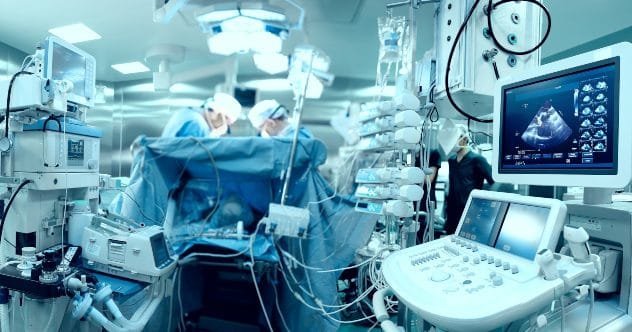
Throughout history, medical advancements have steadily increased life expectancy. The last 100 to 150 years have seen the most dramatic improvements, thanks to scientific breakthroughs. In the United States, the average life expectancy was only 49 years in 1900, and even lower (30–40 years) in 1800. Our enhanced understanding of medicine and science has propelled this incredible progress. Let’s explore ten medical advancements that have significantly increased life expectancy.
The Discovery of Germ Theory

From an early age, we’re taught about germs and the importance of washing our hands. However, in the mid-19th century, the prevailing belief was that diseases arose from spontaneous generation—appearing from nowhere. In 1861, French microbiologist Louis Pasteur, the creator of pasteurization, demonstrated that diseases were caused by microscopic organisms, or “germs.”
The medical and scientific community’s acceptance of Germ Theory led to the prevention of countless deaths from infectious diseases such as typhoid fever, the flu, and dysentery. Understanding how diseases form and spread has been a cornerstone of medical and scientific advancements, positively impacting human life expectancy. Germ Theory is arguably the most important advancement in human medical history.
Anesthetics

Surgeries are commonplace today, with many people undergoing multiple procedures in their lifetime. This was unheard of just 150 years ago. While surgical science has advanced significantly, the use of anesthesia stands out as one of the most critical improvements.
Before anesthesia, patients often chose death over emergency surgery, which was a last resort. Without anesthetics, surgeries were terrifying, with opium, alcohol, or a leather strap being the only options for pain relief. The first recorded use of anesthesia during surgery was in 1846 by William G. Morton, who used sulfuric ether on a patient with a neck tumor. As anesthesia became more refined, the risk of accidents decreased, making life-saving surgeries more accessible and greatly increasing human life expectancy.
Artificial Intelligence in Medicine

Artificial Intelligence (AI) holds incredible potential in all areas of science, including medicine. AI, sometimes called “machine learning,” allows software to catalog information more efficiently than humans.
AI is used in patient diagnosis, doctor-to-patient communication, medical record maintenance, prescription cataloging, and remote patient treatment. While current AI applications have saved lives and optimized medical processes, the future potential is even greater. AI can screen for diseases, personalize patient treatment, and even edit genes. The possibilities for medicine and science are exciting with the increasing use of AI technology.
Laparoscopic Surgery

Laparoscopic surgery, developed in the 1980s, involves smaller incisions than traditional surgery. This minimally invasive surgery uses small tubes and cameras to perform procedures with less risk. Benefits include:
- Shorter recovery time and hospital stays
- Fewer complications
- Smaller scars
- Less pain for the patient
Laparoscopic surgery is almost as common as traditional surgery due to its benefits. Access to less invasive and dangerous surgeries has saved thousands of lives through preventative measures and continues to increase life expectancy.
Organ Transplants

Failing organs have long been a major cause of death. The first successful organ transplant (a kidney) was performed in 1954 by Doctors David Hume and Joseph Murray, marking a significant advancement. By 1967, successful lung, pancreas, liver, and heart transplants followed. These procedures have become more common, performed hundreds or thousands of times each year.
Organ transplants have profoundly impacted patients with organ failure, saving many lives. Advances in technology have led to xenotransplantation, including pig-to-human kidney transplants. In the future, 3D printers or medical facilities may create organ replacements. Organ transplantation technology has been a vital medical advancement for increasing human life expectancy.
Antibiotics

In 2010, the Royal College of Physicians of Edinburgh voted the discovery of antibiotics as the most important medical development of the last 50 years. In 1928, Scottish scientist Alexander Fleming accidentally discovered penicillin, the world’s first antibiotic. Mass production of penicillin began during World War II, thanks to scientists Howard Florey and Ernst Chain. Antibiotics have saved countless lives and significantly extended life expectancy.
ACE Inhibitors

ACE (Angiotensin Converting Enzyme) inhibitors are used to treat high blood pressure, heart conditions, and kidney disease. They dilate blood vessels, increasing blood flow from the heart, and are often prescribed for heart failure, diabetes, heart attacks, and stroke prevention.
Millions of patients in the United States are prescribed ACE inhibitors annually. Introduced in 1975, this preventative measure protects patients from organ failure and significantly improves their quality and duration of life.
Kidney Dialysis

Kidney dialysis removes waste and excess fluid from a patient’s blood when their kidneys aren’t functioning correctly. A dialysis machine filters the blood and returns it to the body, acting as an artificial, external kidney. While not a perfect solution, dialysis has saved many lives, often used as a temporary measure while patients await a kidney transplant.
Dr. Willem Johan Koff created the first dialysis machine during the Nazi occupation of the Netherlands, using spare parts like soda cans and washing machine pieces. His ingenuity and the continued innovation in the medical community have saved lives and extended life expectancy for kidney disease patients.
Medical Imaging Technologies (MRI, X-Ray, CT, Ultrasound)

Medical imaging technologies like CT scans, MRI, X-rays, and ultrasounds allow doctors to see inside the body. Wilhelm Conrad Rontgen invented the X-ray in the late 19th century. Soon after, a Glasgow hospital opened the first radiology department. Ultrasound and CT usage increased in the 1950s and ’60s.
In 1973, Paul Lauterbur created the MRI (magnetic resonance image). Medical imaging benefits are vast and continue to grow. These advancements are essential for understanding the body and making accurate diagnoses.
Vaccines

Vaccines are one of humanity’s greatest tools against disease prevention. First invented in the late 18th century, they emerged out of necessity. Edward Jenner pioneered vaccinations to combat the smallpox epidemic, eventually eradicating the disease. Other crucial vaccinations in the 1800s and 1900s include those for rabies, tuberculosis, cholera, and polio.
New technologies, like mRNA, have expedited vaccine development. Vaccines are a vital part of society and have saved millions of lives.
From germ theory to vaccines, these medical advancements have revolutionized healthcare and significantly extended human life expectancy. Each breakthrough has built upon previous knowledge, leading to a healthier and longer life for people around the globe.
What do you think is the most impactful medical advancement? Leave your comment below!