
When learning a new language, we rarely consider its potential disappearance. Yet, many languages are dying out due to digitization and other factors. Let’s explore ten foreign languages that may vanish in a few decades if we don’t act to preserve them.
10. Te Reo Māori

Te Reo Māori is the language of the Māori, the indigenous people of New Zealand. They arrived in Aotearoa (New Zealand) from Polynesia between 1200 and 1300.
The Māori have faced discrimination for years. Until the 1980s, Te Reo and Māori culture were often banned. Speaking the language could lead to serious trouble. As a result, the language has declined, with some experts predicting its extinction by 2100.
Thankfully, New Zealand legislators are working to restore the language by introducing it into the school curriculum and normalizing its use.
9. Nam Trik

Nam Trik, also known as Guambiano, is spoken by the Misak people in the Colombian Andes. It belongs to the Barbacoan language family, a group of six languages spoken in Southern Colombia and Northern Ecuador.
Today, only a few thousand people speak Nam Trik. Spanish, the national language of both countries, has replaced it. This is due to limited government support and a lack of generational inheritance.
Many young Misak people understand Nam Trik but don’t speak it, indicating the language may disappear within this lifetime.
8. Yiddish

Yiddish originated in Israel and is primarily spoken in Jewish communities. This language is tied to a rich culture that preserves the Jewish way of life.
The Holocaust during WWII led to a significant decline in Yiddish speakers due to the genocide of millions of Jewish people in Europe.
Despite this, Yiddish is making a comeback in Jewish communities in places like New York and Israel, where efforts are being made to teach it to young people.
7. Icelandic

Icelandic has been fighting extinction for years. Young Icelanders learn English from TV shows, internet forums, and video games. They also incorporate more English words into their speech, replacing Icelandic words.
Modern words like “computer” or “cellphone” are often adopted in their English form instead of using the Icelandic equivalents.
The Icelandic Language Committee creates new Icelandic words, but people often don’t use them. Additionally, the immigrant population in Iceland has increased, meaning fewer people speak Icelandic.
The future of the language depends on the government’s preservation efforts and whether the country’s 350,000 people continue to use it.
6. Bavarian

Bavarian is a dialect spoken in the Bavaria region of Germany, home to cities like Munich and Nuremberg.
Despite the region’s large population (around 12 million), only about half speak Bavarian. Standard German, or “Hochdeutsch,” is primarily used in schools and on TV.
Local Bavarians are pushing back to preserve their language. Families are encouraged to use Bavarian at home to help keep it alive.
5. Irish

Although Irish (Gaeilge) became an official language of Ireland in 2007, it’s still endangered. Today, only about 20,000 to 40,000 people speak it fluently.
Historically, the United Kingdom outlawed the use of Irish among English colonists and native Irish people. By the 1500s, the Irish language was banned in Parliament.
The language has made a comeback in recent years and is taught in schools as part of a 20-year government plan to revive Irish heritage.
4. Welsh

Like Irish Gaelic, Welsh is declining. Government legislation in Great Britain played a role in its decline.
By 1500, the government restricted the use of Welsh in Parliament. By the 1700s, only English was allowed in courts of law.
In 1967, the Welsh Language Act recognized the language, and amendments in 1993 provided further support. Today, about 19% of the Welsh population speaks the language, but it’s again on the decline.
3. Greenlandic

If Icelandic is declining, it’s not surprising that Greenlandic is as well. Greenlandic is a mix of 20 dialects, with Kalaallisut as the primary one.
Greenlandic is spoken in Alaska, Canada, and Denmark because it is one of the languages of the Inuit Eskimo tribes.
With only about 57,000 people in Greenland and not all of them speaking the language, Greenlandic could face extinction if preservation efforts aren’t made.
2. Coptic
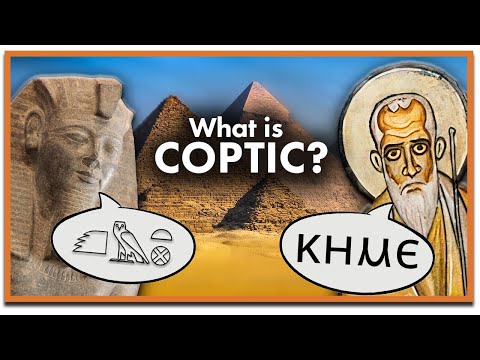
Coptic is sometimes considered a dead language but is still used. It’s the closest language we have to ancient Egyptian!
Coptic is the official language of the Coptic Orthodox Church and Coptic Catholic Church in Egypt.
Church services are conducted in Coptic, and the churches offer courses to help revive the language. There are several fluent speakers in Egypt today.
1. Jeju

Jeju Island, often called the Hawaii of Korea, has its own language called Jejueo. It’s estimated that only about 5,000 people speak it.
Jeju uses the same alphabet as standard Korean, but speakers of Korean can’t understand it.
The language is declining because of the Jeju uprising and the Korean wars. Today, only a small percentage of the elderly population on Jeju Island and a small community in Japan speak the language. Revitalization efforts are underway.
Many languages around the world are at risk of disappearing. From Te Reo Māori to Jeju, these languages carry rich histories and cultural significance. Preservation efforts are essential to keeping these linguistic treasures alive for future generations.
What are your thoughts on language preservation? Share your comments below!