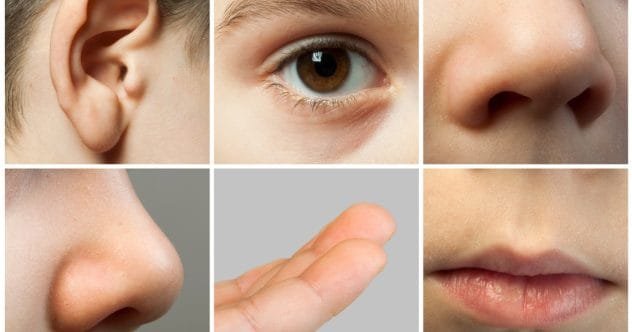
We rely on our senses every day. We use our eyes to see, ears to hear, and nose to smell. These senses help us understand and navigate the world. For most of us, these abilities are pretty standard. But what if some people experience the world in a much more intense way? Imagine having senses so sharp they seem like superpowers.
There are individuals out there with extrasensory perceptions that go far beyond the norm. Their unique abilities offer a fascinating glimpse into the potential of human perception. Let’s explore the stories of 10 people who possess such heightened senses. You might find yourself amazed, and perhaps even a little envious, of their remarkable gifts.
10 Pharrell Williams: Hearing Colors in Music

Pharrell Williams is a famous pop/R&B artist and producer. He’s known for hits like “Happy.” But many don’t know he experiences synesthesia. This is a condition where stimulating one sense automatically triggers another. For Pharrell, music isn’t just sound; it’s also color.
He explains that while he doesn’t physically see colors when listening to music, he can mentally link sounds with specific hues. This helps him decide if different musical elements will blend well together based on their “colors.” Pharrell considers this unique perception crucial to his creative work. He has said, “It’s my sole reference for comprehending.” He believes that if this ability were taken from him, creating music would become incredibly difficult, if not impossible.
9 Concetta Antico: Seeing a Million Rainbows

Most people can see about a million colors. That sounds like a lot, doesn’t it? Now, imagine someone who can see 99 million more colors than the average person. Meet Concetta Antico, an artist with a rare genetic condition called tetrachromacy.
Tetrachromacy means Concetta has more types of cone cells (color receptors) in her eyes. This allows her to perceive a vastly expanded spectrum of colors. Looking at a simple green leaf, she sees much more. “Around the rim, I see orange, crimson, or purple,” she describes. “In the shadow, you may see dark green, but I see violet, turquoise, or blue.” Her artwork, full of vibrant and rich colors, reflects this unique vision. Interestingly, her parents initially thought she might be color blind because she described so many hues they couldn’t see!
8 Ben Underwood: Seeing with Sound

If you think blind superheroes like Daredevil only exist in comics, think again. Ben Underwood was a real-life example of someone who navigated the world without sight, using a remarkable ability. Ben lost his vision at age three due to retinal cancer.
However, by the age of five, he taught himself human echolocation. He would make clicking sounds with his tongue and listen to the echoes bouncing off objects. This allowed him to “see” his surroundings. Ben could run, play basketball, ride a bike, and even skateboard, all without eyesight. His ability was similar to how bats and dolphins use sonar. Sadly, Ben passed away from the same cancer at age 16 in 2009. His story continues to inspire many, showing the incredible adaptability of the human mind.
7 Vincent Van Gogh: Painting His Soundscapes

Vincent van Gogh’s paintings are famous for their vibrant colors and dynamic movement. While his artistic skill is undeniable, some art historians believe there’s more to his unique style. It’s thought that Van Gogh may have had chromesthesia, a form of synesthesia where sounds evoke colors.
He once wrote to his brother, “Some painters have a jittery hand at sketching, which lends their skill something of the tone distinctive to a violin.” This suggests a connection between sound and his art. Unfortunately, this condition might have been more of a challenge than a gift for him. One study suggests his chromesthesia had negative impacts. When he took piano lessons, his teacher noticed he associated notes with colors and dismissed him, thinking he was mad. This experience might have added to his struggles.
6 Natasha Demkina: The Girl with X-Ray Eyes?

Natasha Demkina claims to have an extraordinary ability: eyes with X-ray-like vision. Her powers reportedly started when she was ten. “I was at home with my mother, and suddenly I had a vision. I could see inside my mother’s body,” she said. She described seeing organs and then analyzing the colorful internal picture.
News of her ability spread, and people sought her out for medical insights. Her claims attracted international attention, with groups inviting her to demonstrate her skills. Natasha stated she could identify a prosthetic knee and even detect early pregnancies. However, her abilities have faced skepticism. Many experts suggest she might unconsciously use “cold reading” techniques. Regardless of the controversies, her stories are fascinating and make us wonder about the limits of human perception.
5 Stephen Wiltshire: The Human Camera

Stephen Wiltshire is a British architectural artist with an astonishing talent. He can look at a complex cityscape for just a few seconds and then recreate it in incredibly detailed drawings from memory. After a brief helicopter ride over cities like Tokyo, Rome, or New York, he can draw their skylines with remarkable accuracy.
Stephen is autistic and was non-verbal until age five. He also has savant syndrome, a condition where individuals with developmental impairments exhibit extraordinary abilities in specific areas. His photographic memory allows him to recall precise details, like the exact number of columns on the Pantheon. One of his amazing feats includes drawing a 32-foot long panoramic view of Tokyo after only one week of observation.
4 James Holman: The Blind Traveler

Imagine serving in the army, only to have an illness take your sight and affect your joints. Many would retreat from the world. James Holman, however, did the opposite. After becoming blind at 25, this Englishman from Exeter didn’t let his disability define him.
Instead of staying confined, Holman decided to explore the world. He taught himself echolocation, much like Ben Underwood. By tapping his cane and listening to the echoes, he could perceive his surroundings – changes in terrain, walls, and even cliffs. Using this method, he traveled extensively through France, Italy, Switzerland, and Germany, even writing a book about his journeys. His travels later took him as far as Russia and Turkey, making him one of the earliest known humans to effectively use echolocation for extensive navigation.
3 Ramin Djawadi: Composing with Colors and Numbers

Ramin Djawadi is a German-Iranian composer celebrated for his scores for the movie Iron Man and the TV series Game of Thrones. Beyond his musical talent, Ramin also has synesthesia. For him, this means he can associate colors with numbers, and numbers with colors, which aids his composition process.
He explains that his wife helped him realize he had this condition. When she asked about his creative process, he told her, “I see it in visuals, and all the colors come to me, as well as notes and melodies.” He wasn’t aware there was a specific term for his experience. This unique sensory connection may be one reason he can often play music from memory rather than relying on sheet music.
2 Nikola Tesla: Visions of Invention
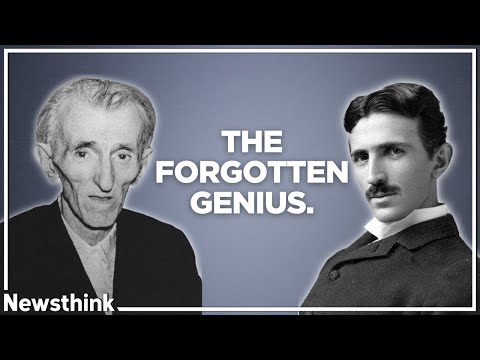
Nikola Tesla, the brilliant mind behind alternating current electricity, experienced intense flashes of light that would often bring visions or ideas. This form of synesthesia is believed to have fueled many of his groundbreaking inventions. His contributions to science and technology are immense, including work on fluorescent lighting, radio technology, and even early robotics.
Beyond synesthesia, Tesla was a voracious reader and reportedly possessed an eidetic memory, which is an even more vivid form of visual recall than a photographic memory. It’s said he could visualize entire inventions in his mind in complete detail, often working from this mental blueprint without needing to sketch designs on paper. This extraordinary mental acuity undoubtedly played a significant role in his prolific career as an innovator.
1 Pam Gilbert: Hearing Her Own Body Too Clearly
What started as an ability to hear faint sounds others couldn’t, soon became a distressing condition for Pam Gilbert. She could hear a tap dripping in the basement from the second floor or her children turning in their beds. But then, she began to hear the internal sounds of her own body: her heart pounding, and even the sound of her eyeballs moving.
Pam was diagnosed with Superior Canal Dehiscence Syndrome (SCDS), a rare inner ear disorder. This condition severely affected her hearing and balance by amplifying internal bodily noises. “They never went away, and there was no way to turn them down,” she described. The constant, inescapable sounds began to erode her sanity. Thankfully, Pam underwent surgery in 2011, which successfully treated her condition and restored her hearing to normal, bringing her much-needed peace.
These individuals show us that the human experience of senses can be vastly different and sometimes truly extraordinary. While some of these heightened senses are a gift, others can be a significant challenge. Their stories push the boundaries of what we consider normal perception.
What do you think about these incredible heightened senses? Would you want any of these abilities? Share your thoughts in the comments below!