As humans build more cities and roads, we often move into areas where animals live. This can be dangerous for wildlife. Many animals get hurt or even die trying to cross our busy roads. This sad situation leads to fewer animals, less variety in nature, and breaks up their homes and hunting grounds. But there’s good news! People have realized this problem and are building special pathways called wildlife crossings. These help animals cross safely.
Wildlife crossings are like special roads or tunnels just for animals. They can be bridges, underpasses, or even special dams for fish. At first, some people wondered if animals would actually use these man-made paths. It turns out, animals are very smart and quickly started using them! These crossings have helped all sorts of creatures, from tiny crabs to big cougars. So, while we might not know why the chicken crossed the road, we now know how many animals can cross safely. Here are some fascinating facts about these amazing structures around the world.
10. Eco-Ducts: Europe’s Answer to Safe Passage

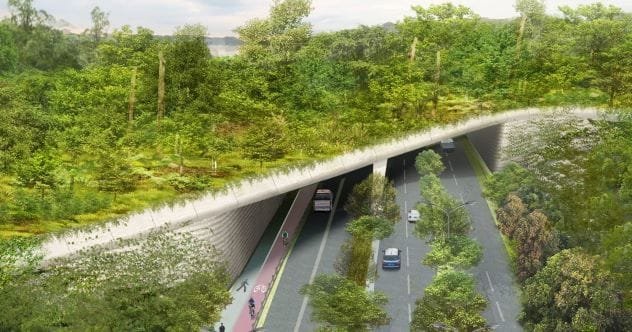
Countries in Europe like the Netherlands, Switzerland, Germany, and France have been building structures to help animals cross roads for many years. In the Netherlands, they call these wildlife crossings ‘eco-ducts’. Believe it or not, there are about 600 eco-ducts in the Netherlands alone! These special bridges and tunnels are built on land that’s protected. This means no hunting, drilling, or mining is allowed there, making it a true safe zone for animals. And they’re planning to build even more!
Other countries are also getting creative. For example, Seoul, South Korea, held a design competition for an eco-bridge. The winning design looks like the mountains it connects, helping local creatures safely cross a busy eight-lane highway.
9. Not a New Idea: Fish Ladders of the Past

The idea of helping animals cross obstacles isn’t brand new. Back in the 17th century, the French used bundles of branches to create ‘fish ladders’. These acted like steps in steep rivers, helping fish get past things like dams. Fish ladders, often made from rocks or wood, help fish swim upstream to find food or mates. It’s funny to think of fish climbing ladders, but these structures are a big help!
In 1837, a Canadian lumber mill owner named Richard McFarland even patented a special fishway design to help fish get around his dam. His was the first of its kind to get a patent. Today, fish ladders are common, especially in rough waters where fish struggle to swim upstream.
8. Boosting Biodiversity: More Than Just Crossing

Wildlife crossings do more than just prevent accidents; they help increase the variety of life, or biodiversity. When animal populations can mix, they become stronger and more resilient. In Japan, engineers built ‘Turtle Tunnels’ under train tracks. This helps protect turtles and keeps trains running smoothly. A similar tunnel was built in Massachusetts for spotted turtles. The road had split their population, making it harder for them to find mates from different families. These turtle tunnels help them mix, which is important for their long-term survival, especially as the environment changes.
7. For All Creatures Great and Small: From Mice to Grizzlies
![A Wild Way to Move - Banff National Park [contains flashing images]](https://rankedfacts.com/wp-content/plugins/wp-youtube-lyte/lyteCache.php?origThumbUrl=https%3A%2F%2Fi.ytimg.com%2Fvi%2F9JX6cqME6Hw%2F0.jpg)
Canada’s Banff National Park is a great example of how wildlife crossings serve many species. The park has 44 wildlife passages – 6 overpasses and 38 underpasses! These were first built in 1978. They help animals like deer, lynx, coyotes, wolves, wolverines, and bears safely cross the busy Trans-Canada Highway. Cameras show that different animals prefer different types of crossings. Grizzlies and deer like open overpasses, while cougars prefer hidden underpasses. Even small animals like mice and voles use small tunnels called culverts.
6. A Red Carpet for Christmas Crabs

Thousands of wildlife crossings exist worldwide, including a very special crab bridge on Christmas Island, Australia. This island in the Indian Ocean is home to about 45 million bright red crabs! To help these crabs during their breeding season, people built a bridge over the main road. This allows the crabs to travel safely from the forest to the ocean. The crab bridge has even become a tourist attraction! It’s quite a sight to see millions of red crabs using their very own 16-foot bridge. There are also underpasses for them, but the bridge is the star of the show.
5. Helping the Florida Panther Avoid a Cat-astrophe

Florida has built over twenty wildlife crossings to help save the endangered Florida panther. These beautiful big cats were almost hunted to extinction in the 1970s. Besides hunting, car collisions are a major threat. Thanks to human help over the last 40 years, including these crossings, the panther population has grown significantly. However, they are still very endangered. Panthers need large, connected areas to roam and hunt. These wildlife corridors, covered with native plants, give them the space they need to survive and hopefully increase their numbers.
4. No Monkeying Around with Safety

In Costa Rica, special ‘Monkey Bridges’ have been built. These are often simple rope bridges. Their main purpose is to stop monkeys from using dangerous electrical wires to get from tree to tree, where they could get electrocuted. Since these bridges were put up, monkeys have learned to use them. And it’s not just monkeys! Other animals like sloths, anteaters, and even porcupines have been seen using these safe pathways. It’s amazing to see a monkey crossing overhead while you’re exploring the rainforest!
3. Koalas Crossing Down Under

Australia also uses wildlife bridges and tunnels. Initially, some experts thought koalas might not be smart enough to use them. But Ecologist Darryl Jones from Griffith University was happy to be proven wrong! Within three weeks of construction in 2016, koalas were regularly using the crossings built for them. This is great news for these adorable animals. Many Australian animal passageways are covered with lush greenery, making them look like a natural part of the landscape. This encourages more species to use them. One bridge originally built for squirrel gliders is now also used by wrens, finches, and other birds.
2. Keeping It Natural for Safe Travels

Since the 1990s, thousands of wildlife crossings have been built in America. These include tunnels and bridges that can help large animals like elk and moose cross safely. These corridors reduce car accidents and reconnect animal habitats. Modern crossings are designed to blend in with nature. Engineers use native plants and trees to cover the bridges, making them attractive to animals. Often, these crossings work best with fencing along highways. The fences guide animals towards the safe passages, creating an effective system for protecting wildlife.
1. Going Bigger: The World’s Largest Wildlife Crossing

The largest wildlife crossing in the world is currently being built in California, near Los Angeles. Named the Wallis Annenberg Wildlife Crossing, this huge overpass will stretch across ten lanes of the Ventura Freeway. It’s expected to be finished by the end of 2025. This project aims to help pumas, deer, coyotes, rabbits, squirrels, lizards, and many other species safely cross the busy 101 freeway. It will even include a path for people to walk and bike! The main goal is to help the local mountain lion population. These lions have become genetically isolated because the freeway blocks their movement. This new bridge will connect their habitat in the Santa Monica Mountains to areas beyond, hopefully leading to more mountain lions and better genetic diversity.
As a Southern California resident, I’m really excited to see this wildlife bridge when it’s complete. It’s a fantastic step towards helping our animal neighbors!
Wildlife crossings are truly a win-win. They protect animals, make our roads safer, and help maintain the delicate balance of nature. From tiny crabs to majestic mountain lions, these structures provide a lifeline, allowing wildlife to thrive even as our world changes. It’s inspiring to see how human creativity can find solutions to protect the amazing creatures we share our planet with.
What do you think about wildlife bridges? Have you ever seen one? Leave your comment below!