Have you ever watched a movie and felt like something was missing, or that a different story was hiding just beneath the surface? Movie fans are great at finding these hidden stories. Sometimes, their ideas, known as fan theories, are so creative they make the movie even more interesting! These theories can change how we see a film, adding new layers of meaning or completely flipping the script. Let’s dive into ten fan theories that are so compelling, they might just be better than the actual movies.
10 Titanic

The tragic love story of Jack and Rose on the ill-fated Titanic is a classic. But what if there’s more to Jack than meets the eye? One popular fan theory suggests Jack Dawson is a time traveler.
Think about it. When Rose is about to jump from the ship, Jack convinces her not to. He mentions falling into Lake Wissota during an ice-fishing trip. The catch? Lake Wissota was man-made in 1917, five years after the Titanic sank. Jack also talks about riding the roller coaster on Santa Monica Pier, which wasn’t built until 1916. Other clues include his rucksack (a model from the future), filtered cigarettes (not common then), and his 1930s hairstyle. Why would meticulous director James Cameron make these mistakes?
The_theory says these aren’t mistakes at all. Jack traveled back in time specifically to save Rose from her desperate situation. This theory not only explains these out-of-place details but also opens the door for imagine sequels where time travel plays a bigger role!
9 Harry Potter

Harry Potter’s childhood with the Dursleys was miserable. They were awful to him, even though he was a polite and kind boy. But why were they so consistently cruel? There seems to be no good reason for their deep dislike of their own nephew.
A fascinating theory proposes that Harry himself was unknowingly a Horcrux for Voldemort. We know Horcruxes are pieces of a dark wizard’s soul, and they can negatively affect the emotions of people around them. Remember how Ron, Harry, and Hermione were affected when wearing Slytherin’s locket? If Harry was a living Horcrux, his very presence could have been slowly poisoning the Dursleys, making them act so terribly.
This idea adds a tragic layer to the story. It suggests Harry was essential for Voldemort’s survival, meaning Harry could never truly destroy his enemy without also destroying a part of himself (which he ultimately does, in a way). More importantly, it makes us see the Dursleys in a new light – perhaps deserving a little pity for being under such a dark influence for years.
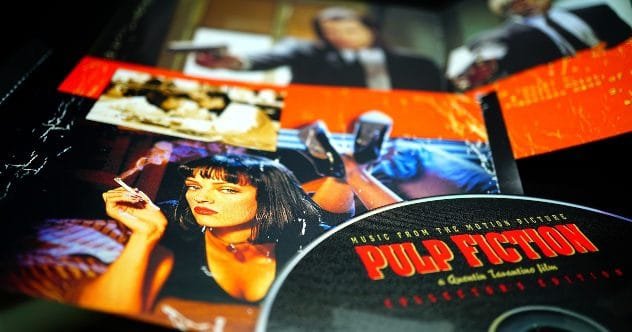
8 Pulp Fiction
Quentin Tarantino’s Pulp Fiction is famous for its mysteries, but none is more debated than the contents of Marsellus Wallace’s briefcase. When Jules and Vincent retrieve it, a golden glow emanates from inside, astonishing anyone who looks. So, what’s in there?
One of the most enduring fan theories is that the briefcase contains Marsellus Wallace’s soul. This theory draws on a few interesting details. Marsellus has an unexplained bandage on the back of his head, and some old tales say the devil can steal a soul through that very spot. The combination lock on the briefcase is “666,” a number often associated with the devil. When Vincent opens the case, he seems mesmerized, and later, a would-be thief is similarly awestruck.
If this theory is true, it means Marsellus sold his soul and wants it back. It adds a supernatural layer to this gritty crime film, suggesting a much larger, perhaps infernal, game is being played.
7 The Shining

Stanley Kubrick’s The Shining is a horror masterpiece, but some fans believe it holds a secret confession. There’s a persistent conspiracy theory that the 1969 Apollo moon landing was faked and that Kubrick, fresh off directing 2001: A Space Odyssey, was hired to create the footage. According to this fan theory, The Shining is filled with clues admitting his involvement.
Consider these points: In Stephen King’s novel, the haunted room is number 217. Kubrick changed it to 237. The average distance to the moon is about 237,000 miles (it’s a bit more, but close enough for a clue). Danny, the psychic child, wears an Apollo 11 rocket sweater. In the book, Danny encounters one ghost child; in the film, he sees twin girls, possibly a reference to NASA’s Gemini (twins) program that preceded Apollo.
Is Kubrick confessing his role in a massive deception? It certainly makes watching The Shining an even more unsettling experience, searching for hidden messages about a faked lunar landing.
6 The Wizard of Oz

The land of Oz is wonderfully strange, but what if it’s more than just a fantasy world? A popular theory suggests The Wizard of Oz is a political allegory, specifically about the debate over America’s monetary policy in the late 19th century.
In this interpretation, Dorothy represents the common American citizen. The Scarecrow stands for farmers, the Tin Man for industrial workers, and the Cowardly Lion for William Jennings Bryan, a politician who opposed the gold standard (which tied the dollar’s value to gold). The Yellow Brick Road they follow? That’s gold itself. And “Oz”? It’s the abbreviation for ounce, as in an ounce of gold. The Wizard, who seems powerful but is ultimately a fraud, could represent the U.S. President or the political system.
This theory turns Dorothy’s journey into a clever commentary on populism and economic policy, giving the beloved classic a surprisingly deep political message.
5 Willy Wonka and the Chocolate Factory

Winning a golden ticket to Willy Wonka’s magical chocolate factory sounds like a dream come true, right? But what if it’s an invitation to something far more sinister? A dark fan theory suggests that Willy Wonka is a serial killer or even a cannibal, and the factory is his elaborate trap.
Notice how each time a child “disappears” or is removed from the tour, the mode of transport (like the boat) has exactly enough seats for the remaining guests. It’s almost as if Wonka planned for them to be eliminated one by one. In the 2005 remake, Charlie and the Chocolate Factory, Wonka (played by Johnny Depp) even says, “Everything in this room is eatable. Even I’m eatable, but that is called cannibalism, my dear children, and is, in fact, frowned upon in most societies.”
Is this a playful line, or a chilling hint at the truth? This theory transforms a whimsical children’s story into a horrifying tale.
4 The Matrix

In The Matrix, Neo escapes a simulated reality created by machines to discover the desolate “real” world. But what if the world he escapes to – Zion and the war-torn Earth – is just another, more complex layer of the Matrix? This theory draws inspiration from ancient philosophy, like Zhuangzi’s dream of being a butterfly, where he couldn’t tell if he was a man dreaming he was a butterfly, or a butterfly dreaming he was a man.
Fans point to certain inconsistencies in the “real” world that don’t quite add up. For example, how can Neo use his powers (like stopping Sentinels) outside the Matrix if those powers are tied to the simulation’s code? Could it be that the machines designed this “Zion” reality as a way to control the humans who rejected the primary Matrix, giving them a false sense of rebellion and freedom?
This idea makes the films even more mind-bending, suggesting that true reality might be forever out of reach for humanity.
3 Grease

Grease is a beloved musical about summer love and high school romance. But a surprisingly dark theory suggests the entire movie is Sandy Olsson’s dying fantasy. Remember the line in “Summer Nights” where Danny sings, “I saved her life, she nearly drowned”? Well, what if he didn’t save her?
According to this theory, Sandy actually drowned at the beach. The whole movie, with its idealized romance and perfect resolutions, is her brain’s final, dream-like creation as she slips away. This would explain the increasingly fantastical elements, especially the ending where Danny and Sandy fly off in a car. Sandy’s first line in the movie is, “I’ve just had the best summer of my life, and now I have to go away.” Perhaps “go away” doesn’t mean back to Australia, but passing on. Even her name, Sandy, could be a sad nod to her fate on the beach.
This theory gives a much darker, more tragic meaning to this upbeat musical.
2 The Silence of the Lambs

The Silence of the Lambs features the brilliant and terrifying Hannibal Lecter. There are a couple of fan theories that add even more chilling layers to this psychological thriller.
One theory posits that Hannibal Lecter, during his time treating Buffalo Bill, didn’t just understand Bill’s damaged psyche – he actively manipulated and worsened it, essentially creating a monster. Why? As an insurance policy. Hannibal knew if he were ever caught, the FBI might need his expertise to catch a killer like Bill, giving Hannibal leverage to escape.
Another, more far-fetched theory, suggests that the FBI is secretly recruiting serial killers and turning them into government assassins. Hannibal is part of this program, and Clarice Starling isn’t just an agent-in-training; she’s a candidate being groomed for it. This changes how you might view Clarice’s boss, Jack Crawford, and the entire operation.
1 Planes, Trains, and Automobiles

This classic John Hughes comedy pairs uptight Neal Page with lovable but annoying shower curtain ring salesman Del Griffith on a disastrous journey home for Thanksgiving. Del talks endlessly about his wife, Marie. The heartwarming twist at the end is that Marie has been dead for years, and Del is all alone.
But a much darker fan theory suggests something truly unsettling: Del’s large, ever-present trunk doesn’t just contain his sales goods. It contains the body of his dead wife, Marie. Imagine Del not as a lonely widower, but as a deranged man possibly on the run, carrying his wife’s remains with him. Suddenly, his odd behaviors and relentless attachment to Neal take on a sinister new meaning.
If you watch the movie with this theory in mind, the comedic clashes between Neal and Del might feel a lot more tense, turning this holiday favorite into a creepy thriller.
Movies are more than just what we see on screen; they live on in our imaginations. These fan theories, whether plausible or purely for fun, show how deeply stories can affect us and how creative audiences can be. They invite us to rewatch old favorites with fresh eyes and discover new meanings we never expected.
What are some of your favorite movie fan theories? Do you think any of these theories make the movies even better? Share your thoughts in the comments below!