The world of biblical archaeology is a fascinating realm where ancient texts meet tangible evidence. Specialists digging in lands mentioned in the Bible sometimes unearth discoveries that dramatically expand our understanding of the past. These finds often spark intense media interest and careful review by historians and archaeologists. The goal is always unbiased reporting, which is crucial for every discovery.
While many modern finds result from years of careful, planned digs, some of an archaeologist’s most significant discoveries come from sheer luck and unwavering persistence. Let’s delve into ten such discoveries that have made a significant impact.
10. Tel Dan Inscription

On July 21, 1993, a groundbreaking discovery was made at the Tel Dan archaeological site in Israel. Gila Cook, the project surveyor, noticed ancient writing on a reused building stone within an old wall. The stone’s surface, polished on two sides, clearly bore the letters BYTDWD. This inscription translates to “The House of David.”
This find is incredibly important because it could be reliably dated to the 9th century BC. This dating was possible due to an ash layer from 733/722 BC, resulting from later Assyrian wars. Such ash layers are an archaeologist’s dream; anything found sealed beneath them must be older, with no chance of later items mixing in. While a few historians have offered other explanations, most agree the inscription refers to the family line of David, Israel’s second king and perhaps its most vital ruler. The presence of the same letters, BYTDWD, on the Mesha Stele (also known as the Moabite Stone), also from the 9th century, further supports the existence and lineage of King David.
9. Yahweh and His Asherah

Kuntillet’ Ajrud is an intriguing archaeological site a few miles west of the ancient Gaza Road. It has no known biblical name and is quite isolated. In 1975, archaeologist Ze’ev Meshel from Tel Aviv University and his team decided to excavate there.
The discoveries at Kuntillet’ Ajrud were extraordinary. Among the most significant were two eighth-century BC storage jars, called pithoi, each weighing about 30 pounds (13 kilograms). These reconstructed pithoi are adorned with paintings of male and female figures believed to be deities, humans, animals, and symbols. They also feature several inscriptions, including three that mention “Yahweh and his Asherah.” Asherah was a known pagan goddess, leading many to wonder if these images depict God with a female partner. It’s been suggested that some images were added later, possibly influenced by regional wars. Still, everything about Kuntillet’ Ajrud and its finds remains puzzling, challenging to interpret, and even more difficult to fully understand.
8. Pontius Pilate’s Grand Avenue
Pontius Pilate is famously known in biblical history as the Roman prefect who oversaw the trial and crucifixion of Jesus Christ. However, his duties as a Roman prefect extended far beyond judicial matters; he was also responsible for public works. Archaeologists recently uncovered a 2,000-foot-long (600-meter) boulevard built by Pilate—an accomplishment he might have preferred to be remembered for.
An estimated 10,000 tons of limestone were used to construct this impressive street. It’s highly probable that the road connected the Pool of Siloam in Jerusalem to the Temple Mount, a sacred site where ancient Jewish pilgrims worshipped and which is still revered today. According to a report in the Journal of the Institute of Archeology of Tel Aviv University, this street’s existence might show that Pontius Pilate wasn’t as insensitive to his Jewish subjects as history has often portrayed him.
7. The Siloam Pool

According to the Gospel of John, the Siloam Pool was the site where Jesus healed a blind man. This pool has always been considered one of Christianity’s most sacred sites, but its exact location remained somewhat uncertain for centuries.
The precise location was finally confirmed in June 2004. Construction workers attempting to repair a water pipe south of Jerusalem’s Temple Mount stumbled upon ancient steps and part of a large pool. This pool was dated to the Second Temple period, the era in which Jesus lived. The Siloam Pool was found near the area known as the King’s Garden, on the ridge identified as the City of David. It’s surrounded by other significant archaeological sites, including remnants of an ancient church from the fifth century, located just southeast of the pool. Its discovery was a landmark moment for biblical archaeology.
6. The Stepped Stone Structure

Many archaeologists have sought to find the remains of King David’s palace. Since getting approval for archaeological digs in Jerusalem is notoriously difficult, many believe the答案 might lie near the monumental stepped stone structure on Mount Zion’s east side, close to the City of David. This structure is arguably one of the most famous ancient remains in Jerusalem and has been excavated multiple times over the past century.
This impressive 65-foot (20-meter) high foundation is the most striking Iron Age structure in Israel. It played a vital role in coordinating and protecting the City of David. More than any other discovery in or near the City of David, this ancient stone construction powerfully reaffirms the likely grandeur of David and Solomon’s Jerusalem. Though it might look like a jumble of stones and boulders, evidence suggests it supported a significant stronghold. The 2005 discovery of massive interlocking walls and a huge stone foundation connected to this structure could be key to definitively identifying what remains of King David’s palace.
5. The Merneptah Stele

Housed in the Egyptian Museum in Cairo, the Merneptah Stele is an ancient, intricately carved stone slab. It describes the conquests of the Egyptian Pharaoh Merneptah, who reigned from 1213 BC to 1203 BC. The Merneptah Stele is particularly significant because it contains the earliest known textual reference to “Israel.” It’s the only reference from ancient Egypt that provides evidence of Israelites occupying the lands of ancient Canaan 3,200 years ago.
The Stele lists the enemies Pharaoh Merneptah defeated during his campaigns, stating, “Israel is laid waste, and his seed is not.” These words are crucial to the history of ancient Israel. This mention might be the “Archimedean point” for the earliest recognition of an ethnic or cultural group called Israel. The late 13th-century BC mention of Israel also aligns with other archaeological evidence of earlier “Israelite” tribe settlements in the central hill country of Canaan.
4. The Numerous Discoveries in Jerusalem

Jerusalem has been the stage for major religious events over centuries. Both early Christianity and later Islam continued to view Jerusalem as a holy city. Some of the most notable biblical finds in Jerusalem include Iron Age remains in the City of David. This area, the original core of the city, has yielded fortifications, water canals, houses, and even small amphitheaters.
In other parts of the ancient city, remarkable Iron Age remains, such as those related to the First Temple, have been uncovered. Hellenistic-Roman remains, linked to the Second Temple and early Christian periods, also reflect the city’s rich history and connection to biblical times. The Temple Mount itself still holds the remains of the outer construction of the Second Temple’s precinct, offering a direct link to events described in the Bible.
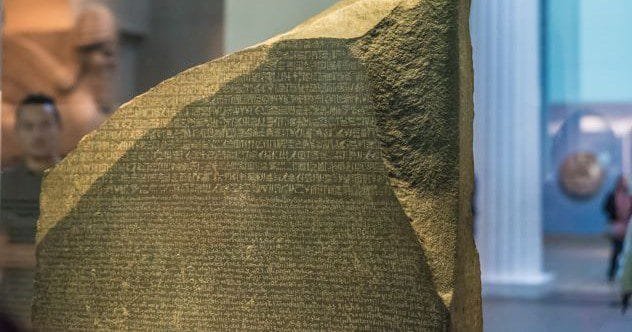
3. The Rosetta Stone

The Rosetta Stone might not be an exciting read, as the text itself isn’t very entertaining. In 196 BC, a scribe affirmed the divinity of King Ptolemy V’s cult by chiseling a decree onto the stone three times, each in a different script: Ancient Greek, Ancient Egyptian hieroglyphs, and demotic script.
This trilingual inscription proved to be invaluable. Without the Rosetta Stone, we might never have deciphered Egyptian hieroglyphs. Discovered during Napoleon’s campaigns in Egypt in 1799, it eventually made its way to London, where it remains. Because Ancient Greek was understood, it provided the key to unlocking the hieroglyphs. Jean-Francois Champollion successfully deciphered them in 1822. This breakthrough opened our eyes to over 3,000 years of perplexing illustrations on Egyptian statues, temples, and monuments, providing a wealth of knowledge that often helps verify accounts in the Scriptures.
2. The Dead Sea Scrolls

In 1947, the world received one of its greatest biblical archaeological gifts when a young shepherd boy discovered the Dead Sea Scrolls. These thousands of parchment pieces were found in different caves on the Dead Sea’s northwestern shore. Over many years, they were painstakingly pieced together. Their discovery has played a huge role in our understanding of ancient Jewish culture and the Bible today. The scrolls contained texts from every book of the Hebrew Bible except for the book of Esther.
Dated to the late 3rd century BC, the scrolls also included several non-biblical writings. These are often linked to the Essenes, a religious group that lived and worked in the Qumran region. The Dead Sea Scrolls shed light on many aspects of Second Temple Jewish culture. They are, indeed, the greatest—and in most cases, the earliest—examples of the Bible’s holy texts we possess.
1. The Ketef Hinnom Scrolls

“May the Lord bless you and keep you; may the Lord cause His face to shine upon you and be gracious to you; may the Lord lift up his countenance upon you and grant you peace.” This blessing is one of the most recognizable verses spoken in both Jewish and Christian ceremonies today. Yet, few people know that this priestly benediction is the earliest biblical verse ever discovered on ancient artifacts.
Two small spools of silver, each tightly wound and bearing this engraved phrase, were found in a tomb near Jerusalem. Tests concluded that the engraved silver dates back to around the early sixth century BC. This makes them more than 400 years older than the Dead Sea Scrolls. Outside of archaeological circles, these two scrolls, which contain the oldest known citations of biblical texts in Hebrew, remain relatively unknown. The fact that this blessing was found on two separate artifacts in a tomb of that age highlights the importance of this benediction to the ancient Israelite religion.
These ten discoveries represent just a fraction of the ongoing work in biblical archaeology. Each find, whether big or small, adds another piece to the vast puzzle of human history and faith, offering us glimpses into the world of the Bible and the people who lived in it.
What are your thoughts on these incredible discoveries? Do you have a favorite, or know of others that have fascinated you? Share your comments below!