In 1877, Louisa May Alcott, celebrated for Little Women, confessed to writing a different kind of story—a dark and lurid romance under a pseudonym. Why? She was “tired of providing moral pap for the young.”
Many great American writers, even surprising ones like Alcott, have delved into the dark, disturbing, and macabre. Often, their tales draw from unsettling real people, places, or events. These sources—childhood nightmares, grotesque insects, psychological experiments, hidden corpses—are sometimes as disturbing as the fiction they inspired.
Explore ten dark inspirations behind some of America’s most famous literary works. You might never read these classics the same way again.
10 Washington Irving & His Headless Horseman

Washington Irving’s The Legend of Sleepy Hollow, published in 1820, depicts the village of Tarrytown haunted by a headless horseman. Set shortly after the American Revolution, villagers suspect the ghost is a Hessian soldier decapitated by a cannonball.
Irving found rich inspiration in the actual Tarrytown, New York. Local legends already spoke of a headless trooper. An account from the Battle of White Plains, just eight miles away, confirms that “a shot from the American cannon… took off the head of a Hessian artillery man.”
Another tale tells of a local whose life was saved by a German mercenary. Later, the family found a headless Hessian corpse, believed it was the same soldier, and buried him—headless—in the Old Dutch Church burial ground. [1]
9 Charlotte Perkins Gilman & a Mental Breakdown

After battling mental health issues for three years, writer Charlotte Perkins Gilman consulted a physician specializing in nervous diseases. In the nineteenth century, this meant a “rest cure.” She was ordered home, allowed only two hours of intellectual activity daily, and forbidden to ever write again.
“I went home and obeyed those directions for some three months,” Gilman later wrote, “and came so near the borderline of utter mental ruin that I could see over.” This traumatic experience fueled her story, The Yellow Wallpaper.
The story features a woman prescribed a rest cure for postpartum depression. Confined to a room with hideous yellow wallpaper, she becomes obsessed, believing a woman is trapped behind the patterns. Eventually, she identifies herself with the trapped figure. Gilman reportedly sent her published story to the doctor, who never replied. [2]
8 Nathaniel Hawthorne’s Unfortunate Family Tree

Nathaniel Hawthorne felt so haunted by his family’s history in Salem, Massachusetts, that he altered his last name’s spelling. His great-great-great grandfather, William Hathorne, was a judge known for having Quaker women whipped naked publicly.
William’s son, John Hathorne, followed suit as a magistrate. In 1692, he served as a chief examiner during the Salem Witch Trials, convicting over 100 women of witchcraft. As the family’s fortune and influence declined over generations, some, including Nathaniel, believed they were cursed due to William and John’s actions.
Hawthorne channeled his ancestors’ misdeeds and his personal guilt into his novel The House of Seven Gables. He explored themes reminiscent of his family’s dark past: witchcraft, wrongful executions, and even a family curse. [3]
7 Octavia E. Butler’s Fear of Flies

While planning a research trip to the Amazon for her Xenogenesis series, science fiction author Octavia E. Butler was plagued by thoughts of insects. She particularly dreaded the botfly, which lays eggs in other insects’ bites, allowing its larvae easy access to flesh upon hatching.
“I found the idea of a maggot living and growing under my skin, eating my flesh as it grew, to be so intolerable, so terrifying,” she wrote. If infected, she’d have to wait for a doctor’s removal or let the larva mature and emerge on its own.
This fear inspired her award-winning novelette Bloodchild. In the story, insect-like aliens use humans, including males, as hosts for their eggs. “Writing Bloodchild didn’t make me like botflies,” Butler later reflected, “but for a while, it made them seem more interesting than horrifying.” [4]
6 H.P. Lovecraft’s Sleep Paralysis

As a sickly child, horror writer H.P. Lovecraft endured terrifying dreams during frequent illnesses. Researchers now suggest he suffered from severe sleep paralysis, explaining the vivid and disturbing nature of his nightmares.
One recurring horror involved faceless, devilish creatures with curved horns, bat wings, and barbed tails invading his room. Lovecraft eventually captured this nightmare in his poem “Night-Gaunts,” describing how the creatures snatched “me off on monstrous voyagings… heedless of all the cries I try to make.”
These night-gaunts later appeared in his novella The Dream-Quest of Unknown Kadath. Lovecraft noted, possibly from personal experience, that these gargoyle-like beings “haunt most persistently the dreams of those who think too often of them.” [5]
5 Mary Jane Ward & the Psych Hospital

Mary Jane Ward, a successful author and happily married woman, suddenly lost her ability to speak coherently in her late thirties. Diagnosed with schizophrenia (though possibly bipolar depression), she was involuntarily committed to Rockland State Hospital in New York in 1941.
The hospital was overcrowded and ridden with disease. Staff often subjected patients to horrifying treatments like lobotomies, electroshock, and insulin shock therapy. Patients like Ward, diagnosed with schizophrenia, endured hydrotherapy—being plunged into freezing water to calm nerves.
After months at Rockland, Ward was discharged and wrote Snake Pit, based on her ordeal. The novel exposed the mistreatment in psychiatric institutions, significantly contributing to mental hospital reform and even inspiring One Flew over the Cuckoo’s Nest. [6]
4 Edgar Allan Poe & a Pair of Corpses

Edgar Allan Poe’s The Fall of the House of Usher features the reclusive Roderick Usher and his twin sister Madeline. Mistakenly buried alive, Madeline claws her way out of the family vault to attack Roderick, killing them both as the house dramatically splits and sinks.
Poe likely drew inspiration from a prominent house in his hometown of Boston. Built in 1684 by publisher Hezekiah Usher Jr. near Boston Common, the mansion passed through many hands before being demolished or moved around 1830.
Legend claims that workers dismantling the house discovered two skeletons beneath it, locked in an embrace behind a rusted iron grate. Some versions say the remains belonged to a sailor and the wife of a former owner, imprisoned there after being discovered together. [7]
3 Louisa May Alcott: Writer and… Nurse

Five years before Little Women, Louisa May Alcott served as a Union Army nurse during the Civil War. Working tirelessly, she tended to soldiers with horrific, often fatal injuries.
Weeks into her service, Alcott contracted typhoid pneumonia. Treated with large doses of mercury, she experienced terrifying hallucinations, including visions of being stoned and burned for witchcraft. Though determined to recover and stay, she was eventually forced home.
Alcott transformed letters written during her wartime service into fictionalized sketches. Published as Hospital Sketches in 1863, they followed Tribulation Periwinkle (Alcott’s stand-in) through her experiences wrapping wounds and comforting dying soldiers. Alcott achieved literary fame but suffered lasting health effects from her illness. [8]
2 Mark Twain & a Blood Feud

Mark Twain’s The Adventures of Huckleberry Finn, the darker sequel to Tom Sawyer, begins with Huck faking his death to escape his abusive father. His journey down the Mississippi River is filled with haunting and grotesque events.
Huck encounters the Grangerford family, locked in a 30-year blood feud with the Shepherdsons for forgotten reasons. Twain likely based this on the real-life Darnell-Lane feud, where two Southern families violently feuded for decades, unable to recall the original conflict.
As a steamboat captain, Twain narrowly missed a riverside shootout between these families. He used this location for the Grangerfords’ final, bloody clash, which Huck witnesses. “I wished I hadn’t ever [seen] such things,” Huck reflects. “I ain’t ever going to get shut of them—lots of times I dream about them.” [9]
1 Harper Lee’s Reclusive Neighbor
![Harper Lee's Only Recorded Interview About 'To Kill A Mockingbird' [AUDIO]](https://rankedfacts.com/wp-content/plugins/wp-youtube-lyte/lyteCache.php?origThumbUrl=https%3A%2F%2Fi.ytimg.com%2Fvi%2FEfsFeMRF7CU%2F0.jpg)
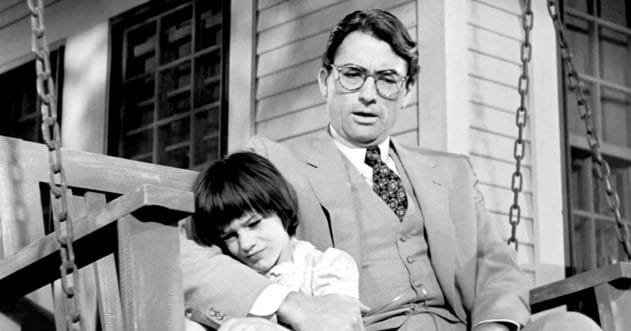
Harper Lee’s To Kill a Mockingbird introduces Alfred “Boo” Radley, unseen outside for 15 years after a youthful run-in with the law led to his father’s custody. Local children imagine him as a “malevolent phantom” who eats squirrels and cats.
Lee drew heavily on her childhood in Monroeville, Alabama. A few doors down lived Alfred “Son” Boulware Jr. Arrested as a teen for stealing cigarettes, his father convinced a judge to release him home, promising no further incidents.
Boulware wasn’t truly free. Though not chained up like the fictional Boo, his father forbade him from leaving the house alone again. Initially sneaking out with friends, Boulware gradually became a recluse, mostly staying indoors until his early death in 1952. [10]
From haunted houses and family curses to personal trauma and societal horrors, the real world provided fertile, if unsettling, ground for some of America’s most enduring literature. These authors channeled darkness into art, reminding us that inspiration can lurk in the most unexpected and disturbing corners of life.
Which of these dark inspirations surprised you the most? Share your thoughts in the comments below!