
When we hear about famous criminals who were never caught, names like Jack the Ripper or D.B. Cooper often spring to mind. Their unsolved cases continue to fascinate and frustrate us. The families of their victims never found peace, and the full truth remains hidden. But these aren’t the only masterminds who slipped through the cracks. Many other cunning and dangerous individuals have committed terrible crimes and simply disappeared. Let’s delve into the unsettling stories of ten such criminals who managed to escape justice, leaving behind a trail of unanswered questions.
10 Bela Kiss

Bela Kiss, a Hungarian tinsmith, is believed to have murdered at least 24 people. Known as the “Hungarian Pickler,” he had a disturbing habit of preserving his victims’ bodies in large metal barrels. Born in 1877, Kiss had a difficult youth. In 1912, his young wife began an affair. Soon after, she and her lover vanished. Kiss claimed they’d run off to America, but it’s widely believed he killed them, marking the start of his grim spree.
Kiss then began targeting other women. He placed personal ads in Budapest newspapers, posing as “Hoffman,” a lonely widower seeking a wife. He charmed women who were often wealthy and had few local family ties. His good looks and personable nature made him attractive, and he convinced some to give him their money or sign over their fortunes.
He’d be seen with these women for a short time, usually no more than a month. Once he had what he wanted, he would lure them to his home, where he lived with only a housekeeper, and strangle them. His collection of barrels grew, leading a neighbor to complain, thinking they contained alcohol. Kiss smoothly explained they were filled with gasoline for the upcoming war (it was 1914). The police believed him and never checked.
When World War I began, Kiss was drafted and left his house and barrels in his housekeeper’s care. Years later, with Kiss presumed dead in the war, police went to retrieve the supposed gasoline. Instead, they found the bodies of 23 women and one man, all strangled and preserved in wood alcohol. Their bodies had also been drained of blood. Kiss was never caught. Sightings were reported for years, including one in New York in 1932 and another potential sighting in 1936. Despite these leads, Bela Kiss disappeared, never facing punishment for his horrific crimes.
9 Josef Mengele

Known as the “Angel of Death,” Josef Mengele was an SS officer and physician during World War II. At the Auschwitz and Birkenau concentration camps, he played a key role in selecting victims for the gas chambers and conducted gruesome experiments on prisoners, particularly on twins. His cruelty was infamous.
After the war, Mengele’s story took a turn. He fled to Argentina with help from other former SS officers. He later moved to Paraguay in 1959 and then to Brazil in 1960, all while using false identities. West German and Israeli authorities, including Mossad, actively searched for him for decades, but he remained elusive.
In 1979, Mengele suffered a stroke while swimming off the coast of Bertioga, Brazil, and drowned. He was buried under the name Wolfgang Gerhard. It wasn’t until 1985 that Nazi hunters, persistent in their search, had Gerhard’s remains exhumed. Forensic tests confirmed they were indeed Mengele’s. While his death brought some sense of closure, the Angel of Death evaded capture for nearly 40 years and never faced trial for his atrocities.
8 Frank Morris and the Anglin Brothers
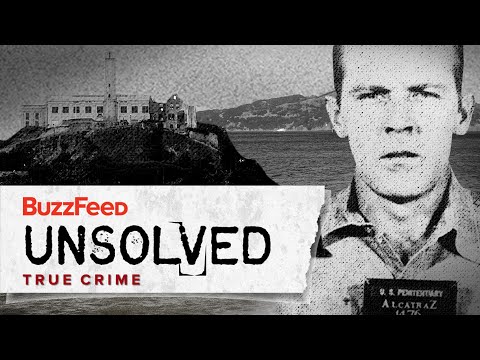
The escape from Alcatraz by Frank Morris and brothers Clarence and John Anglin is one of history’s most famous unsolved mysteries. Alcatraz, an island prison in San Francisco Bay, was considered inescapable. Morris arrived in 1960, and the Anglin brothers followed in 1961. Together, they plotted their daring escape.
On a June night in 1962, the trio placed cleverly crafted plaster dummy heads in their beds to fool the guards. They then squeezed through holes they had painstakingly chipped in their cell walls. Once outside, they launched a makeshift raft made from raincoats into the treacherous bay waters and disappeared.
No trace of them was ever found. Initially, authorities believed they drowned or were eaten by sharks. However, the currents would likely have washed ashore some evidence—bodies, clothing, or raft debris—but nothing surfaced. This lack of evidence has kept the question open: did they make it?
The mystery deepened in 2018 when the FBI acknowledged a letter, allegedly written by John Anglin in 2013. The letter claimed all three survived. While the FBI questions its authenticity, the possibility fuels ongoing speculation about one of the most audacious prison breaks ever.
7 Bible John

Between 1968 and 1969, a serial killer terrorized Glasgow, Scotland, murdering three young women. Patricia Docker was strangled in February 1968. Jemima McDonald met a similar fate a year later. Then, Helen Puttock was killed two months after McDonald. All three were young mothers who had been out dancing.
Police began to notice similarities in the murders. Though DNA testing wasn’t advanced, they identified patterns in how the women were killed and where their bodies were found. A description of the suspect emerged: a well-dressed, articulate redhead, about 25 to 35 years old and around six feet tall.
The name “Bible John” came from Helen Puttock’s sister, who had shared a taxi with Helen and two men named John on the night of Helen’s murder. Helen’s companion, one of the Johns, frequently quoted from the Bible, particularly the Book of Moses. The women jokingly called him “Bible John.” Hours later, Helen was dead.
Despite thousands of interviews and a famous composite sketch, Bible John was never identified. Some have speculated that convicted Scottish serial killer Peter Tobin might have been Bible John, but no definitive link has been established. The case remains one of Scotland’s most chilling unsolved mysteries.
6 Frank Matthews

Frank Matthews was a major drug kingpin in the early 1970s. Operating out of New York City, he became one of the largest cocaine distributors in the United States, with his network stretching from New York to Miami. It’s believed Matthews earned over $20 million from his cocaine empire, commanding a network of over 200 dealers.
His immense success cut into the profits of other drug dealers, leading to dangerous rivalries. In 1972, two of his associates were gunned down, and Matthews himself narrowly escaped a car bomb. After being arrested in 1973, Matthews posted bail and then vanished without a trace.
What happened to Frank Matthews? Some theories suggest rivals killed him. Others believe he went into hiding with his fortune to avoid a lengthy prison sentence. He disappeared from public life, and there have been no credible reports of his criminal activity since. If alive, Frank Matthews remains one of America’s most successful drug traffickers and one of its most elusive fugitives.
5 The Freeway Phantom

The Freeway Phantom was the self-proclaimed name of an unidentified serial killer active in Washington, D.C., in the early 1970s. Over a terrifying 17-month period, he murdered six young Black women. Similar to the Zodiac Killer, the Freeway Phantom taunted police with cryptic messages.
After killing 18-year-old Brenda Denise Woodard in November 1971, a chilling note was found in her pocket: “this is tAntAmount to my insensititivity to people especiAlly women. I will Admit the others wheN you cAtch me iF you cAn! FRee-wAy PhanTom.” The name stuck, as victims were often found near highways.
Police investigated numerous leads, even looking into two former police officers convicted of a separate murder, but made no significant progress. The FBI joined the case in 1974, but the Freeway Phantom seemed to disappear as suddenly as he had appeared. No further killings were linked to him after that initial 17-month spree, and the case eventually went cold.
To this day, the investigation remains open in D.C., though it has faced criticism for poor evidence handling and lack of progress. More than fifty years later, the identity of the Freeway Phantom is likely to remain a dark secret.
4 Victor Gerena

In 1983, Victor Manuel Gerena was an employee at a Wells Fargo armored car depot in West Hartford, Connecticut. That summer, he was recruited by Los Macheteros, a militant Puerto Rican independence group, to assist in a massive heist. The group needed funds for their operations, which had previously targeted U.S. government interests.
Gerena’s inside knowledge was crucial. On September 12, 1983, he executed the plan perfectly. He tied up two co-workers, injected them with sedatives, and then loaded over $7 million in cash into a rental car and drove away. At the time, it was the largest cash robbery in U.S. history.
Neither Gerena nor the money was ever recovered. While the leader of Los Macheteros, Juan Enrique Segarra-Palmer, and several associates were arrested in Puerto Rico in 1985 and later convicted, Gerena vanished. Segarra-Palmer served about two decades in prison before being released.
Victor Gerena remains on the FBI’s Most Wanted Fugitives list, with a substantial reward offered for his capture. His whereabouts, and that of the stolen millions, are unknown.
3 John Ruffo

John Ruffo stands out among fugitives as he’s not wanted for violent crimes, but for a massive financial fraud. This New York businessman conned investors out of hundreds of millions of dollars. His most audacious scheme involved posing as a Philip Morris Tobacco Company executive to secure fraudulent bank loans.
Ruffo told banks about a supposed top-secret research program called “Project Star,” aimed at developing smoke-free cigarettes. He claimed he needed seed money to buy computers for this research. It was all a lie. Banks granted loans to his company, CCS Inc., and Ruffo simply pocketed the cash, eventually amassing around $350 million.
In 1996, Ruffo was caught and arrested by U.S. Marshals. He pleaded guilty to bank fraud. However, in 1998, on the day he was scheduled to report to begin his 17-year federal prison sentence, he disappeared. His rental car was found at JFK Airport, leading authorities to believe he fled the country. Theories suggest he might be in Italy or Russia, but no one knows for sure. John Ruffo remains at large, having orchestrated one of history’s biggest fraud schemes.
2 Amado Carrillo Fuentes

During the 1980s and 1990s, Amado Carrillo Fuentes was one of the world’s most powerful drug smugglers. As head of the Mexican Juarez Cartel, he transported more cocaine from Colombia to the United States than anyone else. He earned the nickname “El Señor de Los Cielos” (The Lord of the Skies) for his extensive fleet of private planes used to move massive drug shipments.
However, his reign ended unexpectedly in 1997. While undergoing extensive plastic surgery in Mexico City to alter his appearance and evade capture by U.S. and Mexican authorities, Fuentes died on the operating table due to complications. His drug empire crumbled almost overnight.
For law enforcement, Fuentes’s death was a mixed outcome. The man they had pursued for years was gone, but he never faced justice for his crimes. By dying, he permanently avoided prosecution. Reports later emerged that Fuentes had attempted to bribe high-level Mexican officials to stop pursuing him. His death also created a violent power vacuum among cartels, leading to increased bloodshed in Mexico that continues to this day.
1 Alexis Flores

Alexis Flores, an immigrant from Honduras, became a wanted man after a horrific crime in Philadelphia in 2000. While working as a handyman, he allegedly kidnapped, sexually assaulted, and strangled five-year-old Iriana DeJesus. Neighbors reported a man named “Carlos” was responsible, but he fled before police arrived.
The case went cold for years, leaving Iriana’s family without answers. Then, in 2002, a man named Alexis Flores was arrested in Arizona for an unrelated incident. Two years later, he was arrested again for forgery, having provided fake identification to police. Flores served a short jail sentence in Arizona, during which a routine DNA swab was taken. He was released in 2005 and deported to Honduras.
In 2006, his DNA was finally entered into the national database. A year later, in 2007, a match came through: Alexis Flores was the “Carlos” wanted for Iriana DeJesus’s murder. By then, he was long gone. Philadelphia police have worked with Honduran authorities, but Flores has not been found. He is currently on the FBI’s Most Wanted Fugitives list and is considered armed and dangerous.
These tales of criminals who escaped justice are unsettling. They remind us that sometimes, despite best efforts, the guilty can slip away, leaving behind a legacy of pain and mystery. The full truth in these cases may never be known, and for the victims and their families, closure remains an elusive dream.
What do you think about these cases? Do you know of other infamous criminals who got away? Leave your comment below!