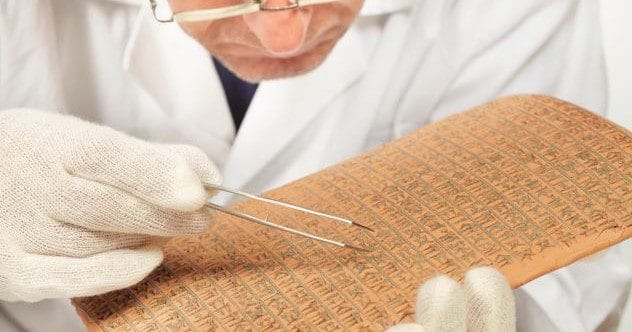
Languages evolve, flourish, and sometimes fade away. While many ancient languages are no longer spoken, their influence persists in subtle yet profound ways. From shaping modern vocabulary to preserving ancient wisdom, these long-dead languages continue to affect our society.
Why Dead Languages Still Matter
A ‘dead’ language might seem irrelevant, but many have left lasting legacies. They provide the building blocks for modern languages, preserve cultural heritage, and offer insights into historical and philosophical thought.
Let’s explore ten long-dead languages that continue to resonate in our modern world:
Latin
Latin, though no longer widely spoken, is arguably the most influential dead language. It’s the official language of Vatican City and the foundation of the Romance languages, including French, Spanish, Italian, and Portuguese.
Many English words and phrases are derived from Latin. Common expressions such as “carpe diem” (seize the day) and “ad infinitum” (forever) demonstrate its continued presence in everyday conversations.
Latin remains prevalent in medical terminology and the classification of flora and fauna, ensuring its legacy endures in scientific fields.
Sanskrit
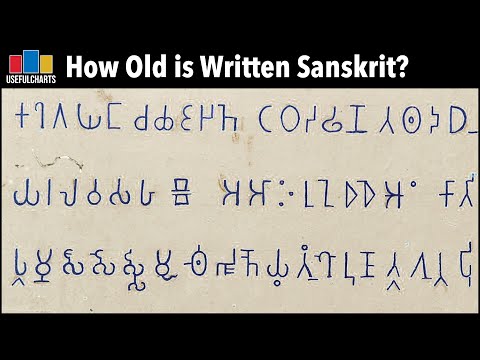
Sanskrit, one of the world’s oldest languages, ceased common usage around 600 BC. Yet, it remains one of India’s official languages, reflecting its cultural and historical importance.
As the primary language of ancient scriptures in Hinduism, Buddhism, and Jainism, Sanskrit holds significant religious and philosophical importance for millions of followers.
The philosophical works of the Vedas, written in Sanskrit, continue to influence modern Indian thought and spiritual practices.
Biblical Hebrew

Biblical Hebrew flourished during the times of the Bible but declined after the destruction of the Temple of Jerusalem. Despite efforts to preserve it, the language nearly disappeared, especially after the Holocaust.
Modern Hebrew, a living and evolving language, is based on the foundations of Biblical Hebrew, preserving its legacy.
Biblical Hebrew remains crucial for those studying original texts of the Bible, keeping the ancient language alive through academic and religious study.
Old English

Old English, spoken in England until around the 1100s, is the ancestor of Modern English. It differed significantly, featuring multiple genders for nouns, unlike today’s simplified structure.
After the 1100s, Old English was replaced by Middle English, which forms the direct basis of modern English. Although it’s no longer spoken, Old English roots are evident in many current words and grammatical structures.
Coptic
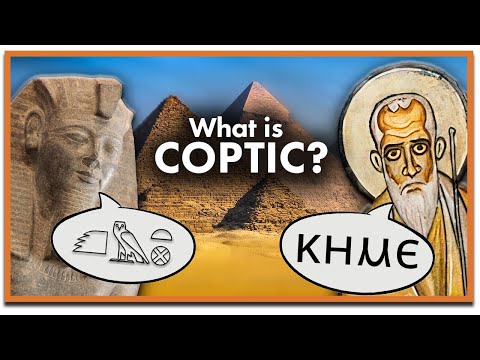
Coptic, an ancient Egyptian language primarily written using the Greek alphabet, was significant nearly 2,000 years ago.
Considered the first-ever Christian language, Coptic was influenced by Demotic, Hieratic, Hieroglyphics, and Greek. Today, it survives through ancient religious texts important to Christians in the Middle East and worldwide.
Old High German

Old High German, the earliest stage of the German language, flourished from AD 500 to 1050. Various dialects existed across Austria, Germany, and Switzerland.
These dialects evolved into modern German. Many ancient religious and philosophical texts were written in Old High German, preserving its academic and religious legacy.
Akkadian
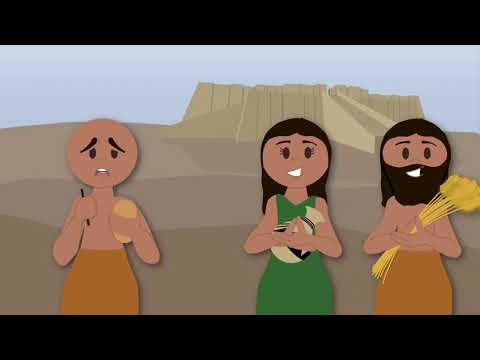
Akkadian, the language of ancient Akkad in Mesopotamia, is recognized as the first Semitic language. It influenced modern Hebrew and Arabic.
Akkadian was the first language written in cuneiform, allowing its texts to survive and provide insights into ancient Mesopotamian civilization.
Aramaic
Aramaic is widely known as the language spoken by Jesus Christ. It was the lingua franca of much of the Middle East, leading to the decline of Akkadian.
Although nearly extinct, modern linguists and researchers are working to preserve Aramaic, ensuring its legacy as the language of Jesus endures.
Old Norse

Old Norse, the language of the Vikings, spread throughout Scandinavia and Northern Europe through invasions and colonization. It significantly influenced languages like Danish, Faroese, Icelandic, Norwegian, and Swedish.
English also borrowed many words from Old Norse, including “berserk,” “cake,” “knife,” “husband,” and “Thursday.”
Ancient Greek

While modern Greek is alive and well, ancient Greek is considered a dead language. It was the language of renowned philosophers and writers like Aristotle, Homer, Plato, and Socrates.
Their works continue to be studied, requiring knowledge of Ancient Greek. Many medical and scientific terms, such as “democracy,” “hermaphrodite,” and “marathon,” have roots in ancient Greek.
Conclusion
These ten long-dead languages demonstrate the enduring impact of ancient tongues. They continue to shape modern languages, preserve cultural heritage, and influence academic and scientific fields. Their legacies live on, reminding us of the rich tapestry of human history and the power of language.
What are your thoughts on the influence of dead languages? Leave your comment below!