Do you ever feel like you’re stuck in a travel rut, visiting the same old tourist spots? Or perhaps you’re eager to uncover a unique attraction right in your own backyard. The world is full of hidden gems waiting to be discovered!
Some of these secret spots have remained under wraps for decades, while others boast centuries of history, yet remain largely unknown. Get ready to add some excitement to your next adventure with these incredible secret places!
The Aventine Keyhole—Rome, Italy

In the heart of Rome, an unassuming green door sits quietly at the end of a street. It’s easy to pass by without a second glance. But this isn’t just any door; its keyhole offers a perfectly framed view of one country and two nation-states, with St. Peter’s basilica centered in the distance.
This door leads to the Priory of the Knights of Malta, a historical religious order. Peeking through the keyhole, you’ll see Italy, Malta, and Vatican City all in one stunning view! The property originally belonged to the Knights Templar in the 12th century before being handed to the Knights of Malta in the 15th century.
The beautiful church visible through the keyhole, Santa Maria del Priorato, was designed by Giovanni Battista Piranesi in the 18th century. Its architectural design is inspired by ships and the sea, reflecting the tradition of comparing Aventine Hill to a ship.
The keyhole vista is meticulously aligned with the gardens, offering a distant view of the Vatican. Whether this was a carefully planned design or a happy coincidence remains a mystery.[1]
Passetto del Biscione—Rome, Italy

Travelers exploring Campo de Fiori might unknowingly walk past a hidden passageway connecting Piazza del Biscione and Via di Grotta Pinta. Passetto del Biscione is a small alleyway packed with history.
It’s believed to be named after the Orsini family’s symbol—an eel. The Orsini family constructed a palace over the ruins of Rome’s first theater, the Theater of Pompey. In 1796, this passageway was said to be the site of a divine miracle.
An image of the Madonna, located within the alley, reportedly moved its eyes in the late 18th century. This miracle attracted devout Christians, but the alley’s hidden location made witnessing the event difficult.
After decades of neglect, the passageway was restored in 2016. Today, the image of the Madonna continues to draw visitors.[2]
Hidden Staircase in Penshaw Monument—Houghton le Spring, England

Built in 1844, Penshaw Monument stands proudly atop Penshaw Hill in Tyne and Wear, England. This Greek temple replica, standing at 70 feet (21.3 meters) tall, commemorates the 1st Earl of Durham, John George Lambton.
This monument holds a secret: a hidden spiral staircase inside one of its pillars! Unfortunately, the staircase was the site of a tragedy in the 1920s, when a teenager fell to his death.
The staircase was then closed for safety, remaining shut for 90 years, except for a brief period in the mid-1960s when vandals broke in. When the National Trust took over maintenance, the staircase reopened in 2011. It’s only accessible on certain days with an admission fee![3]
Traboules Secret Passages—Lyon, France
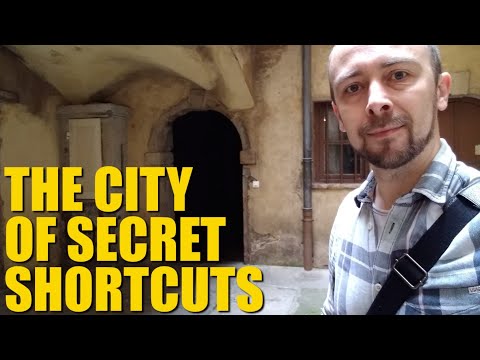
In Lyon, France, a network of secret passageways once provided a swift, secure route for silk workers moving goods to and from markets. Known as traboules, these passages now allow public viewing as they twist through various buildings. The word “traboules” comes from “trans-ambulare,” meaning “to pass through.”
Dating back to the 4th century, the earliest traboules were built to grant direct access to the town’s water supply, bypassing the streets. Of the estimated 400 traboules in Lyon, only a few are open to the public, marked by a special seal. Private passageways remain behind locked gates.
During the 19th century, the silk trade in Lyon’s Croix-Rousse region thrived. The traboules and courtyards became popular meeting spots for local silk weavers. However, as the silk industry grew, merchants began exploiting the weavers with low wages and poor conditions.
This exploitation led to a silk weavers’ rebellion. The weavers temporarily closed the workshops and marched through the town and tried to hold the silk industry until they got fair wages. This was a bloody uprising.
Despite the harsh consequences, the Canuts’ efforts sparked future worker uprisings.[4]
Scotland’s Secret Bunker—Airdrie, Scotland
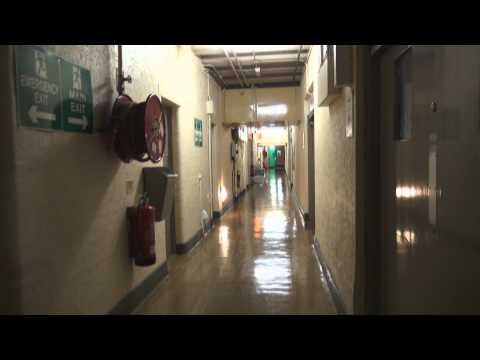
Past a cozy cottage in Scotland lies an entrance to a massive underground bunker. Scotland’s Secret Bunker, spanning 24,000 square feet (2,230 square meters), remained a secret for over 40 years. Located 100 feet (33.3 meters) underground, the bunker has two levels, each the size of a soccer pitch.
Built as a governance center in the event of a nuclear war, it was also part of the ROTOR system—a project to modernize the UK’s radar coverage after World War II. The system included sites with bunkers capable of withstanding bombing.
Now a cold war museum, the bunker displays recreated and fascinating artifacts. It also features military vehicles from various countries and Britain’s only Russian anti-aircraft missile.[5]
Secret Art Deco Tunnel under New Yorker Hotel—Manhattan, New York

The New Yorker Hotel’s red sign is a focal point on West 34th Street in New York. However, much of the hotel’s history remains unknown. The New Yorker Hotel hides many secrets, including an Art Deco tunnel beneath West 34th Street.
Hidden behind a sealed door, the tunnel is filled with old hotel chairs, carpets, and Art Deco tiling. Walking through it takes you directly under West 34th Street in a zig-zag line. At the end, a brass door opens onto the platform by the E line.
A 1930s brochure promotes the tunnel as “so convenient!” and one of the hotel’s best amenities, connecting to Penn Station and stretching to the Empire State Building. You can visit this tunnel with a tour guide.[6]
Drakelow Tunnels—Cookley, England
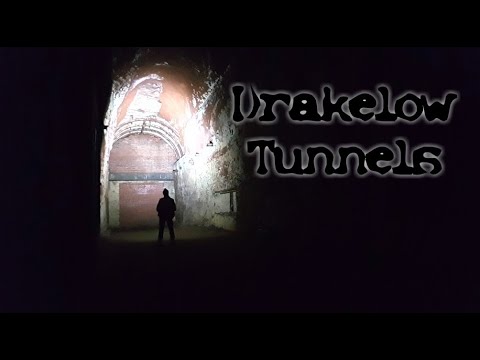
Visitors to Kingsford Country Park might not know about the secret military complex underground. Located near Birmingham, the Drakelow Tunnels have an interesting history.
Dug in the early 1940s, the tunnels served as a shadow factory for Rover. These factories were a 1930s British production method, fostering cross-pollination between industries. Throughout World War II and into the 1950s, the tunnels measured 3.5 miles (5.6 kilometers) long.
By 1961, the British Government converted the tunnels into a secret shadow government headquarters during the Cold War. These tunnels were intended to govern the country if things went wrong.
Decommissioned in 1993 and sold to a private buyer. The Drakelow Tunnels Preservation Trust now works to restore the complex and open a Cold War museum. Some tunnels are open to the public![7]
The Whispering Gallery of Loggia dei Mercanti—Milan, Italy
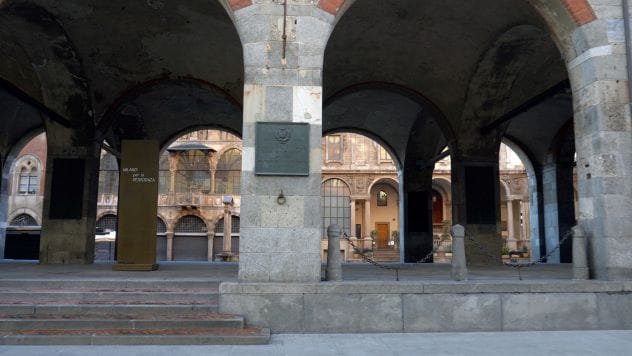
Beneath the Palazzo della Ragione lies the Loggia dei Mercanti, a hidden communication system. Whisper towards the columns, and the archway carries your voice to someone on the other side.
Part of the medieval-era square, the Loggia is a whispering gallery. This phenomenon allows quiet noises to travel, thanks to the archways and domed buildings.
Legends say Renaissance and medieval merchants used this system to share secrets, while those in forbidden relationships used it to whisper romantic words.[8]
Hidden Newgate Prison Cells—London, England

London’s Newgate Prison was truly terrifying! Near St. Paul’s Cathedral, Newgate held the city’s worst criminals for over 700 years until it closed in 1904.
Constructed in the late 12th century by King Henry II, Newgate housed highwaymen, cutthroats, and murderers.
Today, the site is home to London’s Central Criminal Court, known as the Old Bailey. Besides a plaque on the Court’s wall and remains of the Eastern Wall on Amen Court, little remains of Newgate.
The last vestiges of the jail cells lie beneath a Victorian gin palace, the Viaduct Tavern. These eerie cells offer a glimpse into life in London’s most feared prison. Rumored to be connected to the main prison by a tunnel, it’s unclear whether this is true or local legend.
The Viaduct Tavern has been subject to rumors, including stories of a brothel and opium den. Chat with one of the bartenders if you’d like to see these hidden cells![9]
The Hidden Beach—Islas Marietas, Mexico

Hidden within a lush island lies Playa del Amor, a secret beach with plenty of sun and sparkling blue waters. Also Known as, the Hidden Beach is part of the Marietas Islands—created by underwater volcanic eruptions.
Located about 22 miles (35.4 kilometers) west of Puerto Vallarta, Mexico, the Hidden Beach feels like a fantasy movie set. With its white sand cavern and turquoise waters, this gem is perfect for a romantic getaway.
Completely hidden, the aptly named Hidden Beach is accessible only through a water tunnel linking it to the Pacific Ocean. With roughly six feet (1.8 meters) of space above the water, swim or kayak to this secret beach.[10]
These hidden spots offer a unique perspective on travel, revealing the untold stories and remarkable secrets our world holds. From ancient passageways to underground bunkers and secluded beaches, there’s always something new to discover beyond the typical tourist trail.
Next time you plan a trip, consider venturing off the beaten path to uncover your own hidden gem. You might be surprised by the incredible experiences that await!
Which of these hidden places excites you the most? Leave a comment below and let’s discuss!