TV spinoffs often face an uphill battle, but some have defied the odds to become hits. Let’s explore ten of the most successful spinoffs in TV history that not only stood on their own but also surpassed their parent shows.
The Andy Griffith Show (1960–1968)

Originating from The Danny Thomas Show, The Andy Griffith Show introduced Andy Taylor, a widowed sheriff in the quaint town of Mayberry. The show, known for its nostalgic Americana and quirky characters, quickly overshadowed its predecessor.
It pioneered the sitcom formula of a “straight man” lead surrounded by eccentric characters, with Don Knotts as the unforgettable Barney Fife. The show adeptly bridged TV’s simpler times with more complex ones, remaining a top-rated series throughout its run.
The Jeffersons (1975–1985)

All in the Family spawned numerous spinoffs, but The Jeffersons was the most successful. Moving George and Louise “Weezy” Jefferson from Queens to Manhattan, the show depicted an upper-middle-class Black family, a rarity in mid-1970s mainstream entertainment.
The Jeffersons tackled important issues like racism and minority literacy while maintaining its character-driven comedy. It became the second-longest-running series with a primarily African-American cast and the first to feature a married interracial couple.
Mork & Mindy (1978–1982)

Robin Williams’s portrayal of Mork, an alien from Ork, on Happy Days led to the creation of Mork & Mindy. Williams’s improvisational comedy and quirky physical humor made the show an instant hit.
Premiering in 1978, Mork & Mindy quickly propelled Williams to stardom, showcasing his irrepressible talent. Despite its weird and random premise, the show captivated a weekly viewership of 60 million at its peak.
She-Ra: Princess of Power (1985-1986)

Launched as a companion to He-Man and the Masters of the Universe, She-Ra: Princess of Power aimed to appeal to a female audience. The series follows Princess Adora, He-Man’s long-lost twin sister, as she leads the Great Rebellion on Etheria.
She-Ra mirrored many elements of He-Man but with a female lead. The show’s success came from not straying too far from its parent program while offering compelling, derivative characters.
Frasier (1993-2004)

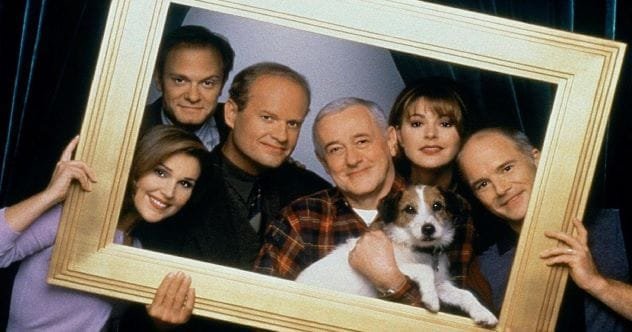
Spinning Frasier Crane off from Cheers was a gamble, but it paid off. The show finds Frasier in Seattle, hosting a psychotherapy radio show. Despite initial character inconsistencies, Frasier embraced its erudite essence.
Frasier stood on its own by focusing on character-driven humor and intellectual wit, winning a record-breaking 37 Emmys. Its success proved that a spinoff could thrive by staying true to its unique identity.
Daria (1997-2002)

Daria Morgendorffer, the monotone classmate from Beavis and Butthead, got her own series. Daria drew a dedicated following with its brainy, dour protagonist who verbally shredded teenage stereotypes.
The show’s success stemmed from its sharp writing and relatable characters. Daria’s deadpan delivery and cynical views made her a unique and memorable animated character.
Law & Order: Special Victims Unit (1999–present)

Law & Order: Special Victims Unit is a spinoff of both Law & Order and Homicide: Life on the Street. Focusing on sex-centric crimes, SVU became the longest-running primetime live-action series in American history.
The show’s persistent B-story explores the emotional toll on law enforcement heroes. Its longevity and compelling storytelling have made it a standout in the crime drama genre.
The Colbert Report (2005–2014)

Stephen Colbert’s conservative pundit caricature from The Daily Show evolved into The Colbert Report. The show became one of the most successful spinoffs, earning critical acclaim and stellar ratings.
Colbert’s gimmick allowed for blistering commentary and insightful interviews, challenging traditional news outlets. His success led to him succeeding David Letterman as a late-night host.
Better Call Saul (2015–2022)

A prequel to Breaking Bad, Better Call Saul tells the origin story of Saul Goodman. The show explores Jimmy McGill’s transformation into the flamboyant lawyer, earning critical acclaim and Emmy nominations.
Written by Breaking Bad’s creator, Vince Gilligan, Better Call Saul benefited from strong writing and Bob Odenkirk’s exceptional talent. Its slow-burn narrative and character development made it a standout spinoff.
The Conners (2018–present)

The Conners emerged after the cancellation of the Roseanne reboot. Continuing the story of the Conner family, the show tackles working-class struggles and political divides, maintaining its relevance.
The Conners excels at humanizing complex issues and portraying real-life challenges faced by American families. Its authenticity and relatable characters have kept it a prominent fixture on network TV.
From classic sitcoms to modern dramas, these TV spinoffs have proven that with strong writing, compelling characters, and a bit of luck, a spinoff can not only survive but thrive. They’ve left a lasting impact on television history, entertaining audiences for decades.
What are your favorite TV spinoffs? Leave your comment below!