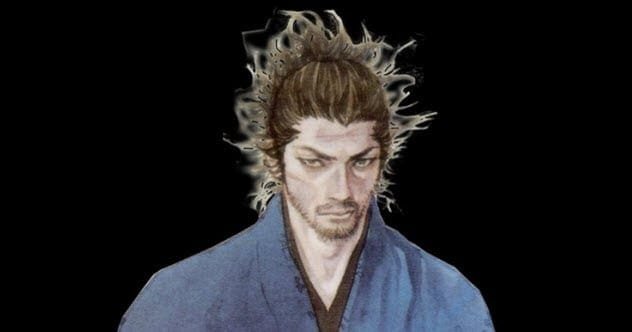
Asia, a continent now known for its booming economies, has a rich history steeped in conflict and valor. For centuries, wars for unification and power shaped its lands, giving rise to extraordinary individuals whose martial prowess became the stuff of legend. History loves a hero, and Asia certainly produced its share of fearsome warriors oozing with skill and sheer badassery. Let’s delve into the stories of ten such certified warriors who shook the Asian continent.
10. Prithviraj Chauhan
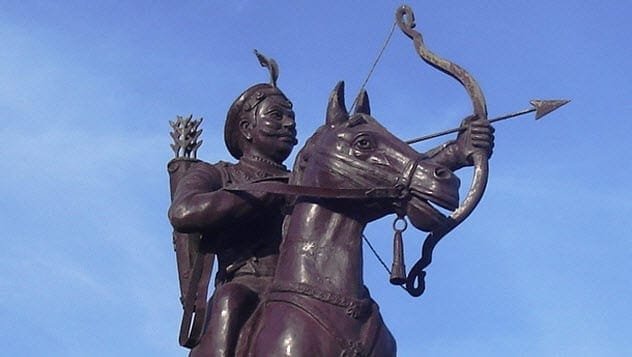
From the Indian Chahamana dynasty, Prithviraja III, more famously known as Prithviraj Chauhan, was a king and warlord renowned as one of history’s fiercest men. He inherited his throne at the young age of 11, a testament to his recognized bravery. Legend even credits him with defeating a lion in barehanded combat, a feat few could claim.
Prithviraj’s skill as a warrior was exceptional. He was particularly noted for his uncanny ability to shoot arrows with pinpoint accuracy relying solely on sound, even while blindfolded. This skill supposedly played a crucial role when he was captured by his enemy, Muhammad of Ghor. After his captors blinded him with hot irons, Prithviraj didn’t despair. During an archery competition set up by Muhammad (perhaps to mock his captive), Prithviraj, guided by sound, hit the target perfectly. He then, as the tale goes, located Muhammad by voice and dispatched him with a single arrow, escaping with his friend Chand Bardai.
While this specific account leans towards folklore, it doesn’t overshadow the numerous conquests and military victories Prithviraj achieved. He remains etched in memory as one of India’s most formidable and greatest kings.
9. Tsutsui no Jomyo Meishu
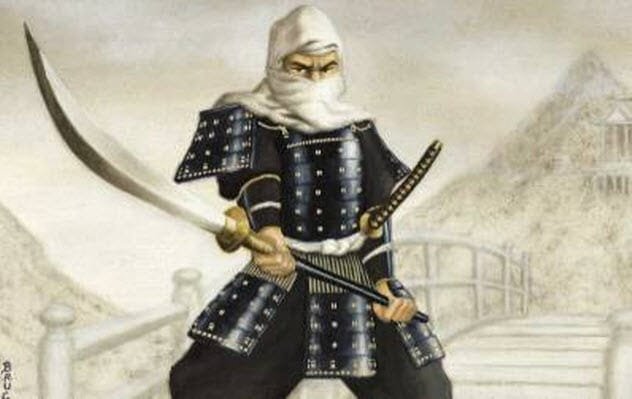
When we picture feudal Japan, samurai and ninja often come to mind as the ultimate warriors. However, an often-overlooked group were the sohei, or warrior monks, who sought enlightenment but were also formidable fighters. Tsutsui no Jomyo Meishu, a warrior monk from the early 11th century, was as tough as they come and stands as one of the most incredible monks to have ever lived.
Imagine this: Jomyo Meishu, clad in black armor, a quiver of arrows on his back, swords at his hip, and a naginata (a pole weapon) in hand, stood defiantly on the Uji River’s banks. His monastery was behind him, and an army of Taira samurai faced him, separated only by two narrow wooden beams. He boldly challenged, “I am Jomyo Meishu from Tsutsui, a warrior worth a thousand men! If anyone thinks themselves my equal, step forward!”
Before his words even faded, he loosed an arrow, striking an enemy in the throat. The enraged samurai fired back, but Jomyo calmly emptied his quiver, felling 12 samurai and injuring 11 more. Not a single arrow missed. Still eager for battle, he charged across a beam, his naginata a whirlwind of motion. He cut down five men before his spear lodged in a sixth. Unfazed, he drew his sword and felled eight more until his blade shattered. Drawing his last knife, he fought on until pulled from the fight. Examining the 63 dents in his armor later, he merely chuckled and praised Buddha.
8. Miyamoto Musashi
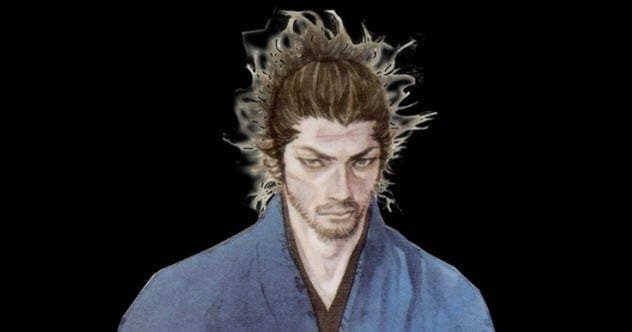
Miyamoto Musashi, another hero from Japan, was a swordsman unlike any other. He revolutionized sword fighting in the country. A wandering ronin, he began dueling at a young age, earning his reputation with just a wooden sword he’d carved himself.
One of his most defining moments followed a series of duels against the Yoshioka School. After Musashi defeated the school’s master and then his brother, the vengeful school plotted to ambush him under the guise of a third duel, to be held at night. Musashi, sensing treachery, arrived hours early and hid. His opponent indeed arrived with an army of swordsmen, riflemen, and archers.
At the opportune moment, Musashi sprang his own surprise, killing his opponent in a single stroke. Immediately surrounded, he drew both his long and short swords, famously cutting a path through his numerous attackers and escaping. This battle likely solidified his development of the Nito Ryu (two-sword) style of kenjutsu, which left a lasting impact on Japanese swordsmanship.
7. Hattori Hanzo
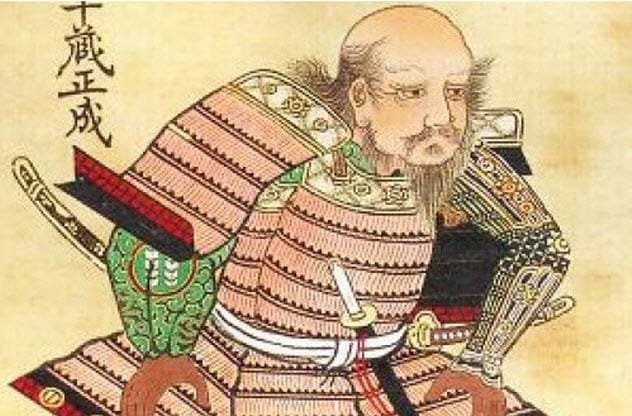
Hattori Hanzo is arguably the most legendary ninja in history, the archetype for stealthy assassins. His skills were so extraordinary that many believed he possessed supernatural powers. A fully trained ninja by age 12, Hanzo earned the fearsome nickname “Hanzo the Demon” by 16, striking terror into his enemies’ hearts.
His abilities were so shrouded in mystery that feats attributed to him often involved tales of precognition, psychokinesis, and even teleportation. He was a survivor of battles where he was vastly outnumbered. In one instance, he led just 30 men in a daring night raid against Takeda Shingen’s much larger forces, successfully launching a counterattack that halted their advance.
While Hanzo had a distinguished career on the battlefield, his most celebrated achievement was escorting Tokugawa Ieyasu to safety in Mikawa, aided by local Iga ninja. Tokugawa would later become the first shogun of a unified Japan. Hanzo passed away at 55, but his legacy endures, notably with “Hanzo’s Gate” at the Tokyo Imperial Palace.
6. Yi Sun-shin
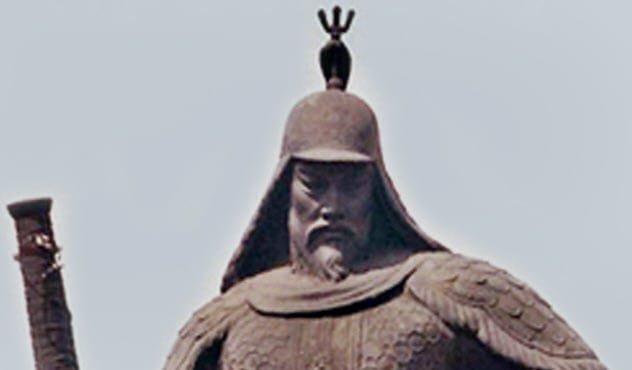
Yi Sun-shin was Korea’s admiral extraordinaire, a symbol of immense bravery and strategic genius. His statue prominently stands in Gwanghwamun Square in Seoul, a testament to his enduring legacy.
Yi’s life reads like an epic film script. After a period of disfavor with the king for refusing what he deemed poor orders, Yi was reinstated and fought the battle that would define his legend, cementing his place in Korean hearts forever. This was the Battle of Myeongnyang.
Facing an invading Japanese fleet of over 300 ships with his own battered fleet of just 13, Yi Sun-shin was ordered to retreat. He famously declared, “I still have 12 ships under my command. As long as I still draw breath, the enemy will never be safe inside this western sea.” (One ship had been lost prior to this count). True to his word, he led his tiny force to a stunning and overwhelming victory against seemingly impossible odds. It remains one of the most remarkable naval achievements in military history.
5. Xiahou Dun
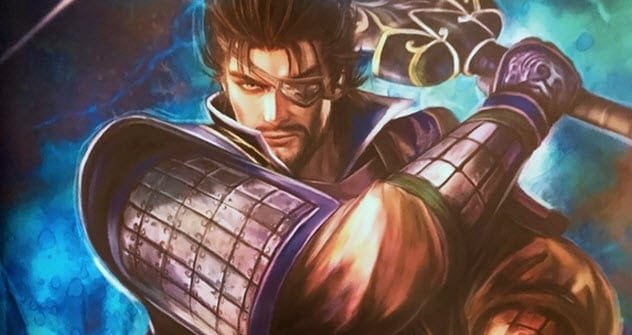
Xiahou Dun, known as the “One-Eyed Dragon,” was a fearsome Chinese general you’d definitely prefer to avoid in battle. His strength and skill were formidable, but one particular act on the battlefield etched his terrifying reputation into history.
During a campaign under Lu Bu (another warrior on this list), Xiahou Dun was struck by an arrow in his left eye. While such an injury would incapacitate most, Xiahou Dun reportedly did something truly shocking. He pulled the arrow out, with his eyeball still attached, and then ate the eyeball. This gruesome display undoubtedly terrified his enemies and bolstered his own troops’ morale. He later earned the prestigious title of “Great General,” partly due to this monstrous reputation.
If you ever wondered how to make your enemies tremble, Xiahou Dun provided a rather extreme example. His act became a symbol of his ferocity and unwavering resolve.
4. Wu Mei (Ng Mui)
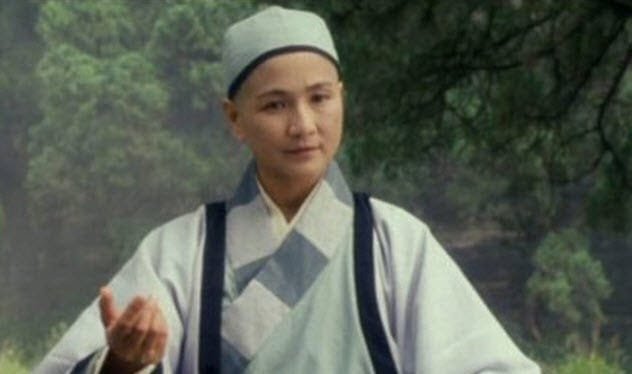
The first of two incredible women on our list, Wu Mei (or Ng Mui) was a martial arts prodigy. She is said to have been one of the legendary Five Elders of Shaolin who survived the temple’s destruction during the Qing dynasty. Born to a general in the Ming imperial court, she had the rare privilege of receiving an excellent education and top-tier martial arts training, highly unusual for women of her time.
Wu Mei did not waste these opportunities. She became a master of Shaolin martial arts, Wudang martial arts, and Yuejiaquan. More than just mastering existing techniques, she was an innovator. Wu Mei is credited with developing or perfecting several martial arts styles, including Wing Chun Kuen (famously taught to Yim Wing-chun), Ng Mui style, Dragon style, White Crane, and Five-Pattern Hung Kuen.
Her martial virtuosity was unmatched, and she challenged the gender norms of her era, playing a significant role in the evolution of Chinese martial arts and leaving a lasting historical impact.
3. Lu Bu
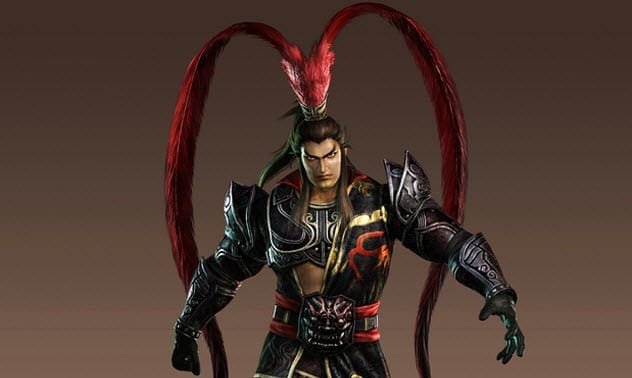
Lu Bu was a man best admired from a very, very safe distance. An imposing figure with immense skill in horsemanship, archery, and melee combat, Lu Bu was the epitome of a badass warrior during China’s late Eastern Han dynasty. His prowess on the battlefield was legendary, and few could stand against him.
However, his most defining characteristic, beyond his strength, was his treacherous nature. Lu Bu, often nicknamed “the defector,” served and then betrayed multiple masters according to his whims and ambitions. He was not an exemplary man in terms of loyalty or personal conduct; he had an affair with his master Dong Zhuo’s maid and was known to covet the wives of his own men.
His life of betrayal eventually caught up with him. Though his strength brought him considerable power and prosperity for a time, his past actions sowed distrust. Ultimately, he was defeated and executed by hanging under the orders of Cao Cao, a powerful warlord who initially considered sparing him but was warned against it due to Lu Bu’s history of disloyalty.
2. Dian Wei
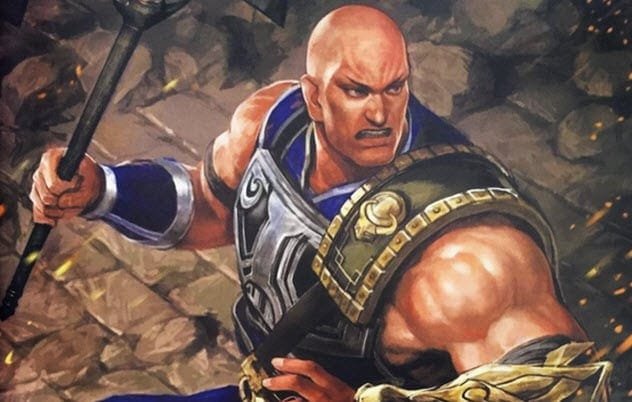
Truly a Goliath of a man, Dian Wei was the quintessential wartime hero. Believed to possess superhuman strength, he famously wielded a pair of twin halberds, or ji, each said to weigh at least 20 kilograms (about 45 pounds). Serving with unwavering loyalty under the warlord Cao Cao (unlike the aforementioned Lu Bu), Dian Wei’s incredible ability to skewer enemies like fish earned him a promotion to chief commander.
Legends say he could carry a dozen short spears at once. One account describes him charging headlong into enemy ranks wearing two layers of armor and, from ten paces away, dispatching foes with thrown spears, never missing. As Cao Cao’s personal bodyguard, Dian Wei often stood by his lord armed with a massive battle-axe, its blade supposedly 33 centimeters (13 inches) long. His mere presence was so intimidating that people were often too terrified to even look directly at him.
His absolute loyalty ultimately cost him his life. He heroically held the rearguard to allow Cao Cao to escape after a surprise attack at Wancheng. Facing overwhelming numbers, Dian Wei fought like a demon, even using two enemy corpses as weapons when his own were lost. He finally fell, riddled with wounds, but not before taking many enemies with him, a true testament to his valor.
1. Khutulun
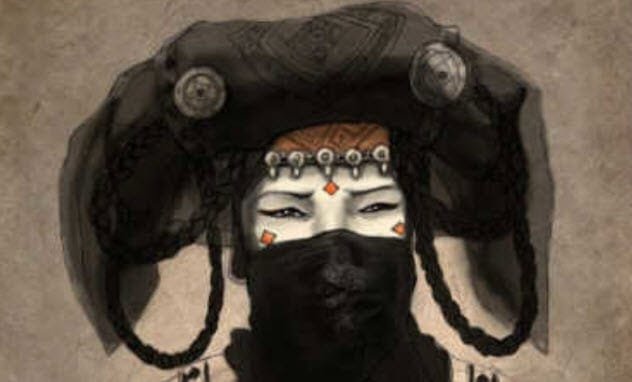
Last, but by no means least, we have Khutulun, a Mongolian warrior princess who could put most men to shame. A cousin of the famed Kublai Khan, Khutulun was a princess who defied every stereotype. Described in Marco Polo’s accounts as a superb fighter, she frequently rode into battle alongside her father, Kaidu, a powerful Mongol leader.
As a Mongol noblewoman, it wasn’t unusual for her to wrestle and shoot bows. However, Khutulun’s skill was extraordinary; she was reportedly better than any man. Her prowess made finding a husband difficult. She famously declared she would marry any man who could defeat her in a wrestling match. The catch? Any challenger who lost would owe her 100 horses.
Through this unique challenge, her athleticism and strength earned her a herd of 10,000 horses. In the end, she chose her own husband, reputedly a man she never wrestled, a remarkable display of independence considering the era’s norms of arranged marriages. Khutulun was a true force of nature, a princess who carved her own path through martial skill and indomitable will.
These ten warriors, each with their unique tales of courage, skill, and sometimes sheer ferocity, represent just a fraction of the legendary figures who shaped Asian history. Their stories remind us that heroism and badassery know no single form or origin.
What do you think of these legendary warriors? Did we miss any of your favorites? Leave your comment below!