Death is a certainty, but what happens to our bodies after we’re gone can be surprisingly diverse. Forget traditional burials; some corpses embark on truly unusual afterlives. From becoming pigments for art to being transformed into diamonds, here are 10 bizarre ways human remains have spent time outside of the grave…
Painting Pigment

Imagine your remains becoming part of a masterpiece. That’s precisely what happened when ground-up mummies were used to create a rich brown pigment known as Mummy Brown. Popular among artists for shading and flesh tones, this practice faded as people found the idea of using human remains in paint distasteful. Legend has it that even the famed painting Liberty Leading the People may have been painted using Mummy Brown.
Book Binding

Anthropodermic bibliopegy is the chilling process of binding books with human skin. One notable example involves Dr. John Stockton Hough, who used skin from a deceased patient to bind books about female health. Similarly, a book detailing the crime of John Horwood was bound using his own skin after his execution. These unsettling artifacts offer a stark reminder of the past.
Corpse Diamond

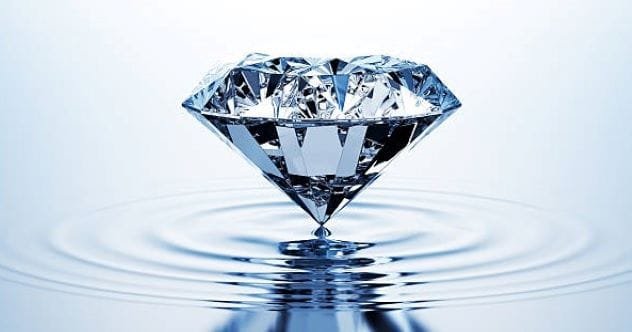
Turn ashes into diamonds? Absolutely. Since humans are about 20% carbon, cremated ashes can be transformed into industrial diamonds. The carbon is extracted, purified, and subjected to intense pressure and heat, mimicking natural diamond formation. The resulting clear diamond, often blue, offers a sparkling, albeit unusual, memorial.
Exhibit at Body Worlds

Body Worlds, created by Dr. Gunther von Hagens, showcases plasticized human cadavers posed in lifelike positions. Through a process of preservation and polymer replacement, these bodies become educational exhibits, blurring the lines between art and anatomy. However, the exhibit has faced controversy regarding consent and ethical display.
Self-Made Mummy

In a practice emulating the Buddhist monk Kūkai, at least 17 Japanese monks mummified themselves through a rigorous process of diet restriction, dehydration, and ingestion of toxic tea. Entombed alive, they were later examined for successful mummification. Those preserved intact are revered in shrines, seen as having achieved a profound state of meditation defying death.
Hand of Glory

The Hand of Glory is a macabre talisman from European folklore, crafted from the hand of a hanged murderer. Pickled and fitted with a candle made of human fat, it was believed to possess magical powers, such as opening locks or inducing comas. Its origins may stem from a translation error confusing it with mandrake roots.
Mount Everest Landmark

As glaciers melt on Mount Everest, the bodies of deceased climbers are emerging, becoming grim landmarks. “Green Boots,” a body visible near the summit, and “Rainbow Valley,” an area strewn with brightly colored climbing gear on frozen corpses, serve as chilling reminders of the mountain’s deadly conditions.
Expert Witness

Cruentation, an ancient court proceeding, involved presenting the accused before the deceased victim, believing the corpse would bleed in the presence of the murderer. While scientifically dubious, fluid release from a decaying body might have been misinterpreted as evidence. This practice persisted even into 19th-century America.
Smoked Mummy Party Guest

The Anga people of Papua New Guinea historically mummified their dead, preserving them in clay and displaying them on cliffside shrines. Believing these mummies could offer guidance, they were sometimes brought into village celebrations to ensure their spirits felt included and didn’t cause mischief.
Planted on a Corpse Farm

Corpse farms study human decomposition under various conditions to aid forensic science. By observing how bodies decay in different scenarios, experts can improve time-of-death estimations and differentiate between natural death and foul play, contributing crucial insights to crime investigations.
From art to science, the post-mortem journey of human remains takes many unexpected turns. These bizarre examples reveal how death, while universal, can lead to incredibly diverse and, at times, unsettling outcomes.
What do you think about these unusual uses of human remains? Leave your comment below!