Theft, robbery, swindling, and twisted desire—these elements fuel horrific crimes that capture our imaginations. But what happens when these events inspire movies? Get ready to explore ten cinematic chillers and thrillers rooted in shocking real-life crimes.
10. The Body Snatcher & The Flesh and the Fiends

In 19th-century Scotland, William Burke and William Hare turned from canal laborers to body suppliers for Edinburgh’s medical schools. At first, they robbed graves, but soon they discovered it was easier to murder people and sell their remains. Their technique, known as “burking,” involved suffocating their victims.
Their crimes inspired Robert Louis Stevenson’s short story “The Body Snatcher,” which was adapted into the 1945 film of the same name, directed by Robert Wise. The film follows an unscrupulous doctor and his medical student protege who are blackmailed by a body snatcher. In 1960, The Flesh and the Fiends, starring Peter Cushing as Robert Knox and Donald Pleasance as William Hare, also dramatized the Burke and Hare murders.
9. Special Agent

The DeAutremont brothers—twins Roy and Ray, and their brother Hugh—committed the American West’s last train robbery in 1923. They boarded a Southern Pacific train hoping to steal from the U.S. Post Office Department, but the dynamite they used scattered the contents. Worse, they shot four of the train’s crew and didn’t even find the money they were after.
After fleeing the scene and assuming aliases, the brothers were eventually caught. The attempted robbery and murders inspired the 1949 film Special Agent. The movie features two brothers who rob a train to save their farm, leading to a detective hunt. The opening credits state it’s based on official files but cites the fictitious “Devereaux Case.”
8. The Hitch-Hiker
![The Hitch-Hiker (1953) [Film Noir]](https://rankedfacts.com/wp-content/plugins/wp-youtube-lyte/lyteCache.php?origThumbUrl=https%3A%2F%2Fi.ytimg.com%2Fvi%2FXIeFKTbg3Aw%2F0.jpg)
Billy “Cockeyed” Cook, upon his release from prison, declared his ambition to live by the gun and roam. In December 1950, he began a spree of kidnappings and murders, targeting unsuspecting drivers who offered him rides.
Cook’s crime spree involved multiple victims, including the Mosser family, whom he murdered in cold blood. His actions terrorized communities, and he was eventually apprehended in Mexico. Cook’s story became the basis for Ida Lupino’s 1953 film, The Hitch-Hiker, a chilling depiction of a killer on the loose.
7. The Night of the Hunter

Harry Powers used the American Friendship Society to lure women, posing as a wealthy widower. He targeted lonely hearts, promising them a comfortable life only to drain their bank accounts and, in some cases, murder them.
His crimes inspired the 1955 film The Night of the Hunter, directed by Charles Laughton and starring Robert Mitchum. Mitchum plays Harry Powell, a self-proclaimed minister who preys on women, mirroring Powers’s deceitful methods.
6. The Phenix City Story

Phenix City, Alabama, was rife with lawlessness, from bootlegging during the Great Depression to gambling and vice after World War II. Albert Patterson, a candidate for state attorney general, sought to clean up the city but was assassinated.
Patterson’s assassination led to martial law and a large-scale investigation. The 1955 film The Phenix City Story portrays these events, with a son avenging his father’s death in a town controlled by corruption.
5. While the City Sleeps
![While the City Sleeps (1956) ORIGINAL TRAILER [HD 1080p]](https://rankedfacts.com/wp-content/plugins/wp-youtube-lyte/lyteCache.php?origThumbUrl=https%3A%2F%2Fi.ytimg.com%2Fvi%2FHexzEg3cxJY%2F0.jpg)
William Heirens, known as the “Lipstick Killer,” committed a series of murders that terrorized Chicago. His victims included two women and a young girl, with sexual pleasure as his confessed motive.
Charles Einstein’s novel The Bloody Spur, based on Heirens’s crimes, became the basis for the 1956 film While the City Sleeps. The film focuses on journalists competing to identify the serial killer, departing from the actual crime details.
4. Butterfield 8

Starr Faithfull, a young flapper, lived a tumultuous life filled with sexual escapades and substance abuse. Her diary detailed her experiences, including abuse by her cousin, Andrew J. Peters, leading to a mysterious death on a deserted beach.
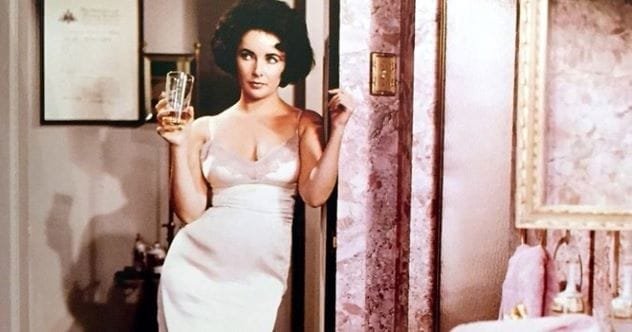
Faithfull’s life story inspired the 1960 film Butterfield 8, in which Elizabeth Taylor played a character based on Faithfull. The film explores themes of exploitation and the tragic consequences of a troubled life. Despite Taylor’s reluctance, she won an Academy Award for her portrayal.
3. Mad Dog Coll

Vincent “Mad Dog” Coll was a ruthless killer during Prohibition. Known for his wild and unpredictable behavior, he led a street gang and engaged in violent clashes with rival gangs, particularly Dutch Schultz’s crew.
Coll’s life inspired the 1961 film Mad Dog Coll, which portrays him as a maniac with a machine gun. The film dramatizes his violent acts, including the accidental killing of a child, which earned him the moniker “Mad Dog.”
2. 10 to Midnight

Richard Speck murdered eight student nurses in a Chicago townhouse in 1966, a crime that shocked the nation. His actions faded into infamy, but his victims have been largely forgotten.
The 1983 film 10 to Midnight, starring Charles Bronson, is based on Speck’s murders. The movie depicts a cop turning vigilante to catch a ruthless serial killer, reflecting the public’s demand for justice.
1. To Die For

In 1990, Pamela Smart conspired with her teenage lover, William Flynn, to kill her husband. Smart was found guilty and sentenced to life in prison. Her case brought significant media attention to cases of educators involved with students.
Smart’s story inspired the 1995 film To Die For, starring Nicole Kidman. Kidman plays Suzanne Stone-Maretto, who manipulates a teen into murdering her husband. Smart herself criticized Kidman’s portrayal, deeming it simplistic and inaccurate.
These films, while fictionalized, offer a glimpse into the dark realities behind some of history’s most chilling crimes. They remind us of the human capacity for both evil and the enduring quest for justice.
What are your favorite true-crime inspired movies? Leave your comment below!