
The Tunguska Incident, which occurred in the early 20th century, is one of the most fascinating near-miss events in human history. While most people believe that a meteor exploded over the Tunguska region of Siberia, some researchers suggest other explanations. Let’s examine some facts to truly appreciate how close we came to a potential disaster.
10. The Nearest the Modern World Came to a Cataclysmic Event

Several events similar to the Tunguska incident have occurred throughout the 20th century. However, the Tunguska incident is considered the closest the modern world has come to a truly catastrophic event. It was pure luck that nobody died, and the explosion happened in an unpopulated area of Russia. Had it occurred over a major city like Moscow, the devastation and loss of life could have been immense.
Many people in the area witnessed the explosion’s effects. Residents reported seeing a “pillar of fire” and feeling powerful shock waves. Some were even knocked to the ground. Others described hot wind gusts that swept through the area shortly after the explosion.
9. It Exploded in the Air

The meteorite didn’t actually hit the ground. It exploded several miles above the forests. It took several years for researchers to reach this conclusion due to delays in sending a scientific team to the site.
When scientists arrived, they found a desolate forest with trees bent sideways as if snapped. They estimated the explosion occurred three to six miles above the ground. The resulting shockwave destroyed almost 800 square miles of forest. The shockwaves from the explosion traveled around the world twice before dissipating, showing the impact’s magnitude.
8. The Impact Was Felt as Far as Europe

Reports of the Tunguska incident came from Europe as well. F.J.W. Whipple described how the night skies in Sweden glowed for several nights after the explosion, as if it were daytime. He noted that “very good photographs could be taken at midnight.”
Another Swedish witness mentioned that “one could read the minutest lettering” due to the night sky’s brightness. The aftereffects were remarkable, highlighting how devastating it could have been if the explosion had occurred further west, impacting Europe and the rest of the world.
7. The Strange Noises of Two Weeks Before

About two weeks before the explosion, strange events were reported in Karelinski. A local newspaper wrote about a “bright bluish-white heavenly body” seen by villagers. This light appeared to be intelligently controlled and shaped like a “pipe.”
The object was visible for ten minutes. Then, a sound like military gunfire was heard. The glowing craft turned smoky black and became a ball of smoke. Before this, the ground shook, and flames and bizarre shapes appeared in the sky. There were also multiple reports of military-style gunfire in the hours before the Tunguska incident.
6. A “Crippled Spacecraft” Exploded!

Alexander Kasantsev proposed some of the most unusual theories about the incident. Some researchers believe he hid these ideas in his fiction, including his work Explosion. He believed a “crippled spacecraft,” possibly using nuclear energy, caused the devastation.
Although many dismiss this as lunacy, the idea is intriguing, especially since Soviet authorities discouraged giving credence to UFO mysteries. Several scientists and researchers also concluded that some kind of nuclear explosion had taken place.
5. The Claims of Felix Zigel and Alexis Zolotov

Felix Zigel and Alexis Zolotov took the alien spacecraft theory further. Their research suggested the blast zone was oval-shaped, similar to descriptions of UFOs. Zolotov also found a “metallic presence” in the soil of the blast zone, supporting the idea of a nuclear-powered alien craft exploding.
They gathered witness testimonies from locals who claimed to see a “fireball” changing direction in the sky on the morning of the explosion. The Tatranska Observatory in Poland reportedly tracked a strange object that changed direction several times, corroborating these accounts.
4. The Valley of Death—The Copper Cauldrons Mystery

One of the most peculiar theories involves the Valley of Death, an area with legends dating back centuries. Traders and smugglers spoke of strange copper “cauldron-like” devices in the ground, large enough for a person on horseback to enter.
People who spent the night in these shelters often became ill, showing symptoms similar to radiation poisoning. Legends also describe these cauldrons firing “balls of fire” at an enemy in the sky. Some researchers believe these are ancient alien defense weapons, possibly active on the morning of the Tunguska incident. This might explain the strange “gunfire” sounds heard that day.
3. The Ill-Fated 2013 Visok Expedition

In 2013, Michale Visok identified circular impressions in the Valley of Death. He led an expedition to investigate. Upon examining these anomalies, they found an unexplainable metallic presence.
After only a few hours, Visok experienced nausea and dizziness, similar to the symptoms described in local legends. The weather changed suddenly, forcing the team to abandon the expedition. Visok recovered, but doctors couldn’t explain his sudden illness.
2. The Discovery of the Crystal Remains of an Alien “Technical Device”

In the early 2000s, Yuri Lavbin claimed to possess strange crystal blocks from the blast zone, which he asserted were part of an alien “technical device.” These crystals had precise holes and strange pictures that Lavbin claimed couldn’t be created with current technology, confirming their alien origin.
Lavbin suggested the alien craft intentionally collided with a meteor to save Earth from disaster. While some in the UFO community support Lavbin’s theories, most dismiss them.
1. Other Modern Examples Of How Close We Come To A Global Wipe Out!
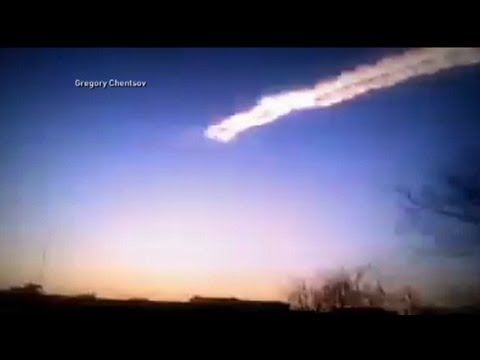
The Tunguska event isn’t the only near miss. Several other incidents have come close to causing devastation. In 1947, a large meteorite hit the Sikhote-Alin Mountains in Russia, causing significant shockwaves.
In 1930, a meteor exploded over the Curuca River in Brazil, leaving no crater. This event was only discovered due to modern technology. More recently, in 2013, a meteor exploded nearly 20 miles above the ground in Russia, captured on camera. The shockwaves shattered windows in nearby buildings.
Next time, we might not be so lucky. A meteor could explode over a city or strike the planet directly. Developing space-based defense weapons might be our only chance to avoid such a scenario. Otherwise, it’s a matter of when, not if, another major impact occurs.
The Tunguska Incident remains a captivating mystery, blending scientific inquiry with intriguing possibilities. From the confirmed devastation to the wilder theories of alien involvement, it serves as a reminder of the powerful forces in our universe and the potential threats they pose. The unanswered questions surrounding this event continue to fuel speculation and inspire further research.
What do you think really happened at Tunguska? Leave your thoughts below!